
Ethereum Glamsterdam Upgrade: ePBS, BALs, Every EIP and Operational Changes
- whackur
- Blockchain
- October 17, 2026
Glamsterdam aims to expand Ethereum L1 capacity by changing both how blocks are built and how receiving nodes validate them. Enshrined proposer-builder separation (ePBS) brings commitments, payload reveals and proposer payments into the protocol. Block-level access lists (BALs) carry actual state accesses and post-transaction changes so receiving nodes can parallelize reads and validation. Gas repricing and networking changes support that effort. These changes do not guarantee lower fees for every transaction or a particular TPS figure. EIP-7773 defines the scope; EIP-7732 and EIP-7928 define the two central mechanisms.
Read More
Understanding Besu: From Ethereum Execution to Bank Token Payments
- whackur
- Blockchain
- October 15, 2026
Besu is a Java Ethereum client that executes smart contracts and verifies and stores their results. Banks can use it to build a ledger that handles deposit tokens alongside interbank settlement assets. It also serves as an execution client on Ethereum mainnet. These deployments share execution technology, while the issuers of money and the parties that finalize the ledger depend on the network. Besu documentation
Read More
Glamsterdam's New Gas Model: EIP-8037 State Gas, EIP-8038 Access Costs, EIP-2780 Intrinsic Gas
- whackur
- Blockchain
- October 15, 2026
Glamsterdam’s three gas proposals make new persistent state more expensive and raise the cost of updating existing state, while lowering the base cost of some transactions that do less work. A fresh cold storage write has specified components of 12,100 execution gas plus 97,920 state gas; the first cold change away from an existing slot’s nonzero transaction-start value costs 12,100 execution gas and no state gas. Both still draw on the transaction’s single gasLimit, but gasleft() does not report the separate state-gas reservoir. These are specification costs, not measured Solidity function totals or an announcement that the rules are active on mainnet. EIP-8037, EIP-8038 and EIP-2780 define the changes together.
Read More
Bitcoin, Ethereum, and the Quantum Computing Question
- whackur
- Blockchain
- July 5, 2026
Quantum computers are a long-term threat to the signatures that protect Bitcoin and Ethereum. The public research checked on October 16, 2026 (KST), however, estimates resources for future error-corrected machines; it does not demonstrate recovery of a real secp256k1 private key on quantum hardware. Risk depends on how long a public key is exposed, how long an attack takes, and whether authentication and authority can migrate first. Bitcoin’s defenses remain proposals, while Ethereum is working on a transition across accounts, consensus, and data. Resource-estimation paper, BIP-360, Ethereum Foundation transition plan
Read More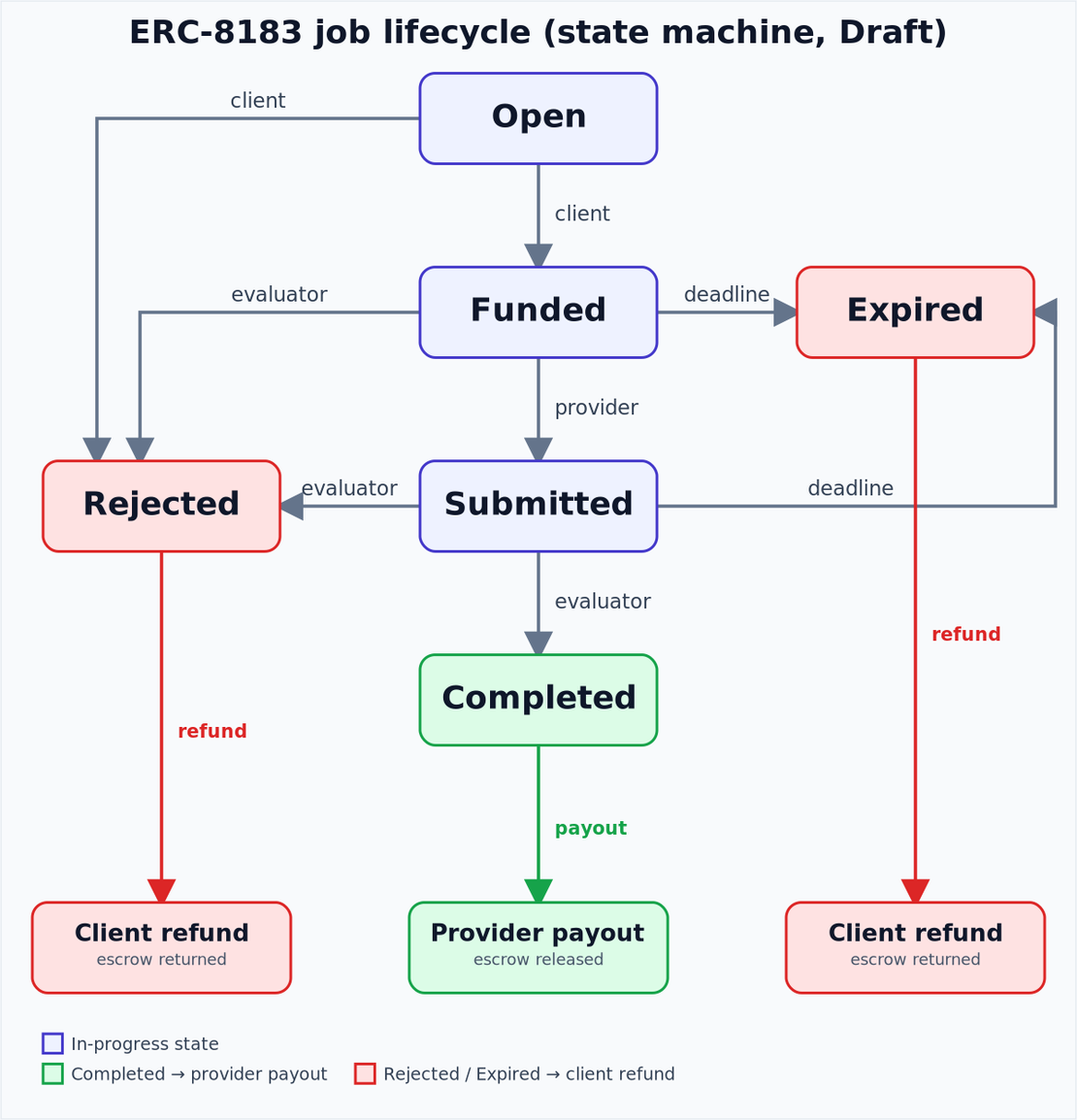
AI Agent Commerce and Coordination: ERC-8183, ERC-8226, ERC-8001, ERC-8041
- whackur
- Blockchain
- July 1, 2026
The ERC-8004/8126/8196 trust stack defines three layers: agent identity, security verification, and policy-constrained execution. It identifies an agent, scores its risk, and keeps it acting within the limits an owner has set. All of that answers one question: can I trust this agent to act on my behalf?
Read More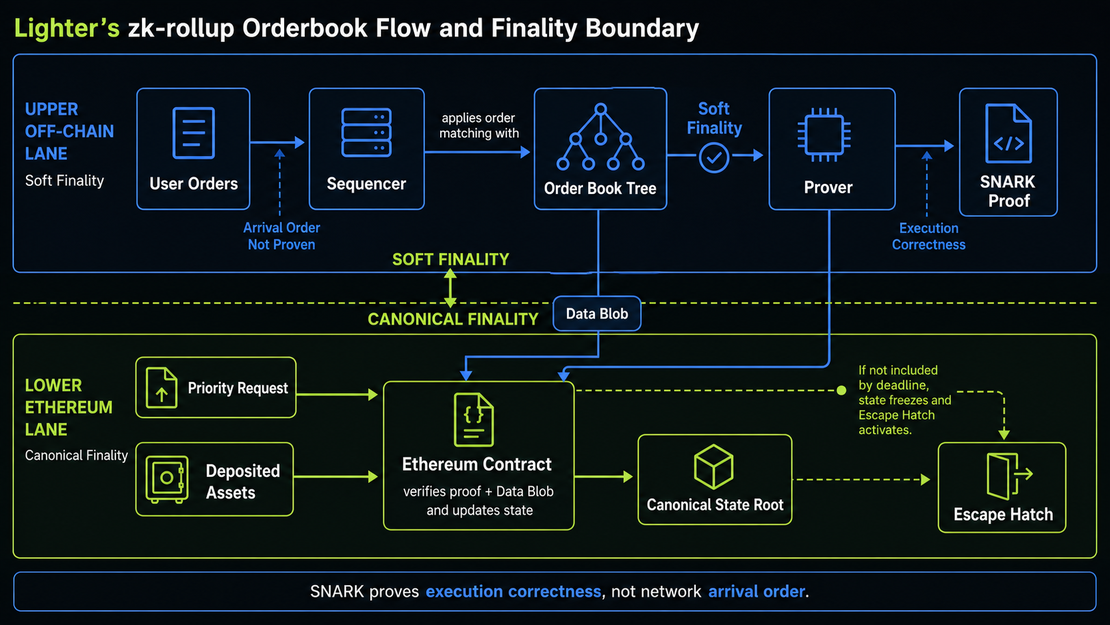
Lighter: A ZK-SNARK Orderbook DEX on Ethereum
- whackur
- Blockchain
- June 30, 2026
Decentralized exchanges come in two main forms. AMMs (Automated Market Makers) like Uniswap set prices algorithmically from pool ratios and work as permissionless swap venues. Orderbook DEXes match individual buy and sell orders by price and time priority, the same way centralized exchanges like Binance or Coinbase operate. Orderbooks enable limit orders, tighter spreads with active market-making, and more precise price discovery. AMMs do not.
Read MoreTags
- A2a
- Act
- Agent
- Agent-Debate
- Agent-Finance
- Agent-Harness
- Agent-Skills
- Agentic-Payments
- Ai-Agent
- Ai-Agents
- Ai-Architecture
- Ai-Blockchain
- Ai-Research
- Ai-Search
- Ai-Security
- Akash
- Anthropic
- Apify
- Base
- Benchmark
- Besu
- Bitcoin
- Bittensor
- Block-Access-Lists
- Canton
- Capital-Markets
- Ccip
- Cctp
- Chainlink
- Circle
- Coding
- Coding-Agent
- Coinbase
- Commerce
- Competition
- Compliance
- Context-Engineering
- Cross-Chain
- Cryptography
- Daml
- Data
- Data-Enclosure
- Data-Licensing
- Decentralized-Compute
- Depin
- Dex
- Diffusion-Policy
- Distillation
- Eip
- Eip-2780
- Eip-3009
- Eip-8037
- Eip-8038
- Emergent-Behavior
- Ensemble
- Enterprise-Blockchain
- Epbs
- Erc-8001
- Erc-8004
- Erc-8041
- Erc-8126
- Erc-8183
- Erc-8196
- Erc-8226
- Ethereum
- Evals
- Evaluation
- Evm
- Execution-Client
- Fhe
- Fido2
- Fintech
- Gas
- Glamsterdam
- Goldman-Sachs
- Google-Cloud
- Gpt-5-6
- Groth16
- Harness
- Heloc
- Hermes-Agent
- Identity
- Imitation-Learning
- Institutional-Finance
- Kimi
- Knowledge-Management
- Kya
- Langfuse
- Langgraph
- Lerobot
- Llama-Cpp
- Llm
- Llm-Agents
- Llm-as-Judge
- Llm-Observability
- Local-Llm
- Maci
- Math
- Mcp
- Memory
- Metadata
- Mev
- Moa
- Model-Routing
- Moe
- Mpp
- Mtp
- Multi-Agent
- Observability
- Okf
- Onchain
- Open-Source
- Open-Standard
- Opik
- Orderbook
- Passkey
- Physical-Ai
- Platforms
- Post-Quantum-Cryptography
- Post-Training
- Privacy
- Prompt-Engineering
- Provenance
- Python
- Qbft
- Quant-Finance
- Quantum-Computing
- Qwen
- Rag
- Reasoning
- Reinforcement-Learning
- Render
- Reputation
- Retrieval
- Reverse-Kl
- Rl
- Robot-Learning
- Rwa
- Search-Agent
- Security
- Self-Improvement
- Semaphore
- Settlement
- Skills
- Small-Language-Model
- Smart-Contract
- Smart-Contracts
- Smolvla
- Snark
- Software
- Solidity
- Sp1
- Stablecoin
- Stigmergy
- Swe-Bench
- Tokenization
- Tracing
- Trading
- Tutorial
- Ucp
- Uncensored
- Usdc
- Validators
- Vla
- Voting
- Wallet
- Webauthn
- X402
- Ylds
- Zero-Knowledge
- Zk-Proof
- Zk-Rollup