Blog Posts
- Home /
- Blog Posts
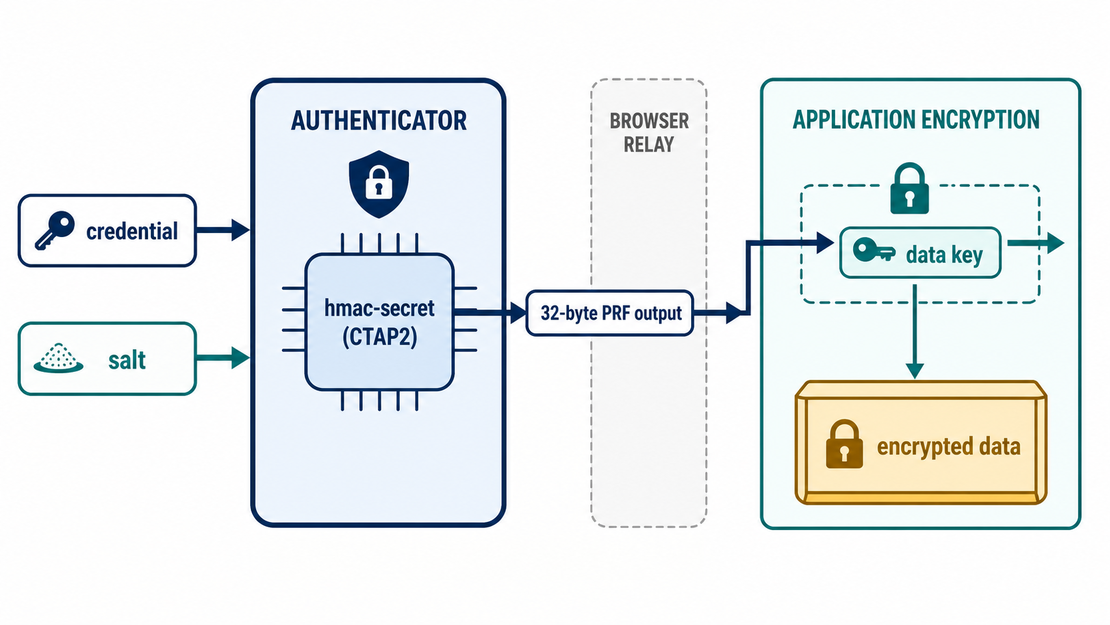
Pulling Encryption Keys Out of Passkeys with the WebAuthn PRF Extension
Passkeys show up on login screens everywhere now. What’s less well known is that the same authenticator holding your passkey can also hand out key material for encryption, not just authentication. The prf extension in WebAuthn is that path. This post covers what PRF actually returns, how it relates to the CTAP2 hmac-secret extension, what you still have to build yourself before it’s usable for real encryption, and where device and platform support stand as of 2026.
Read More
TradingAgents: Reading the Paper and Code Behind an LLM Trading Desk
TradingAgents is a research framework in which several LLM agents analyze evidence, challenge a proposal, and produce a judgment about one instrument with supporting reports. In the current code, the risk team reviews the Trader’s proposal and the Portfolio Manager assigns the final rating. The paper’s high backtest returns do not establish that these ratings translate into live profits. The current evaluation code explicitly excludes order fills and an account cash ledger. Final decision, evaluation scope
Read More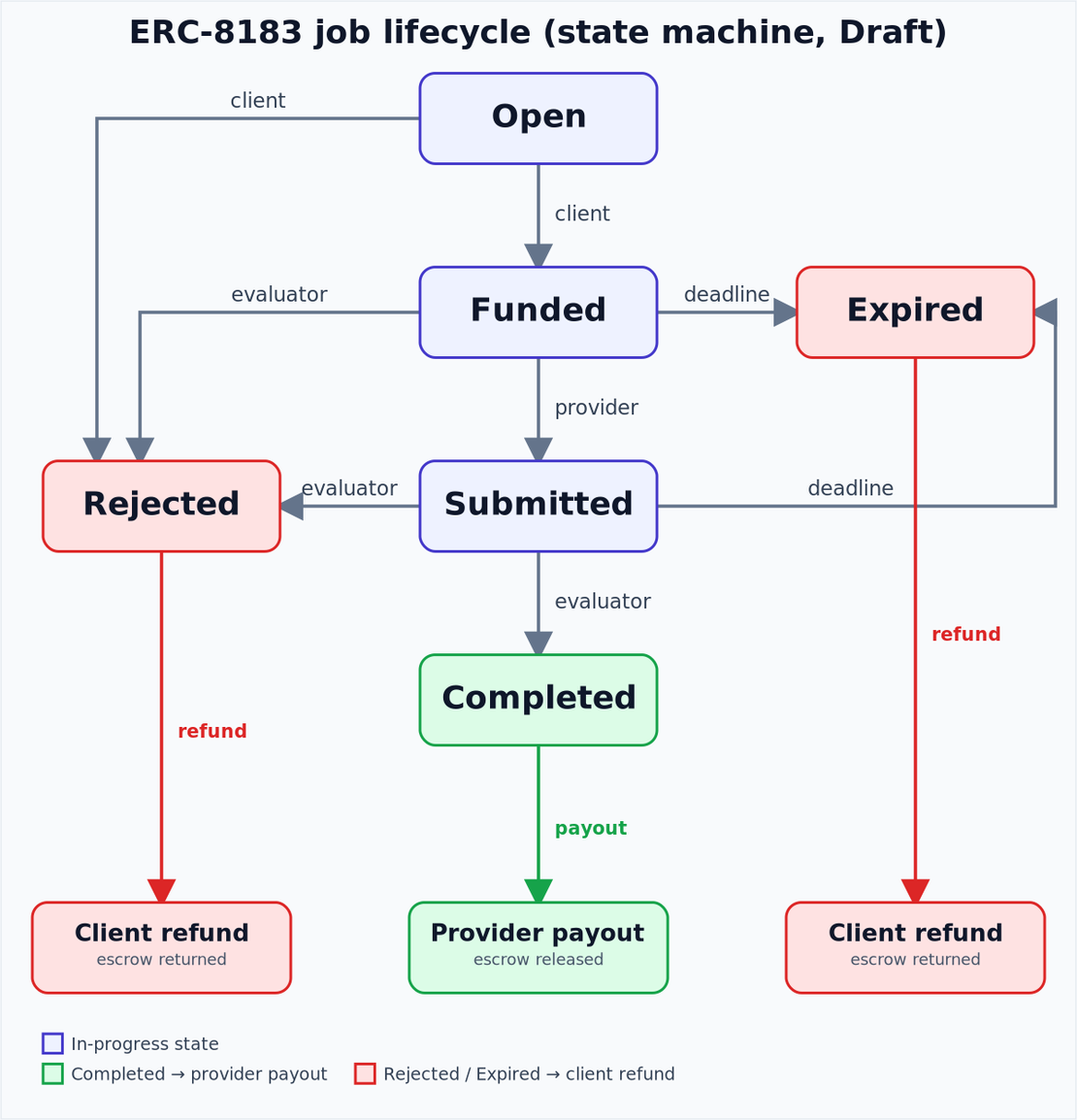
AI Agent Commerce and Coordination: ERC-8183, ERC-8226, ERC-8001, ERC-8041
- whackur
- Blockchain
- July 1, 2026
The ERC-8004/8126/8196 trust stack defines three layers: agent identity, security verification, and policy-constrained execution. It identifies an agent, scores its risk, and keeps it acting within the limits an owner has set. All of that answers one question: can I trust this agent to act on my behalf?
Read More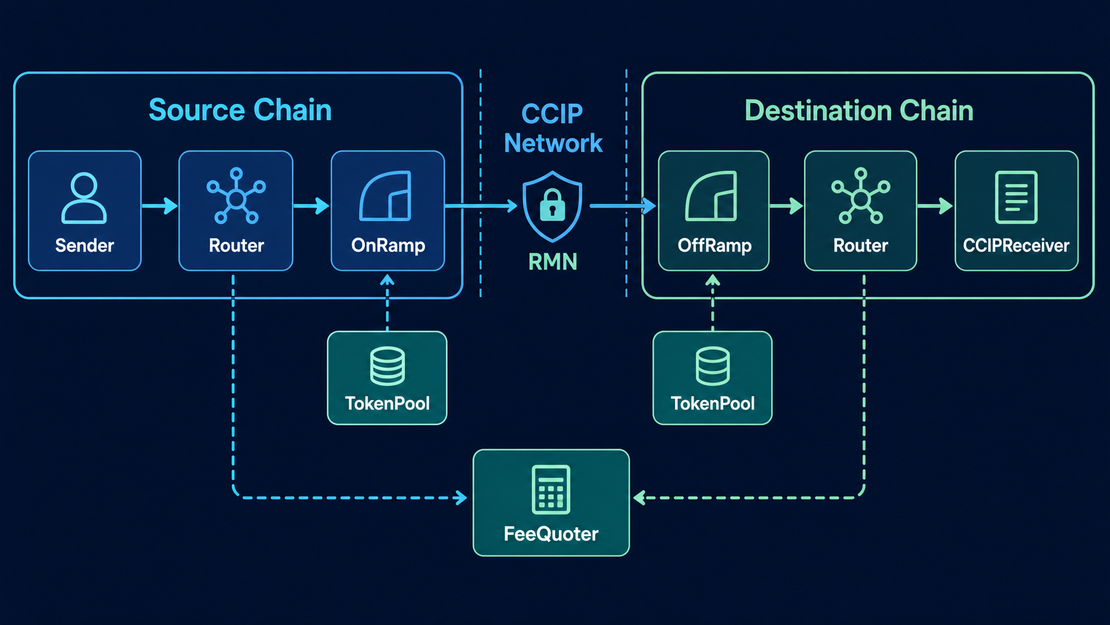
Chainlink CCIP EVM Contracts: Architecture from Source Code
- whackur
- Blockchain
- June 30, 2026
EVM chains are isolated by design. A contract on Arbitrum has no native way to call a contract on Base, and sending USDC from Ethereum Mainnet to Polygon is not a built-in operation. Cross-chain bridges filled that gap for years, but the category has seen repeated security incidents that highlight how wide the attack surface is.
Read More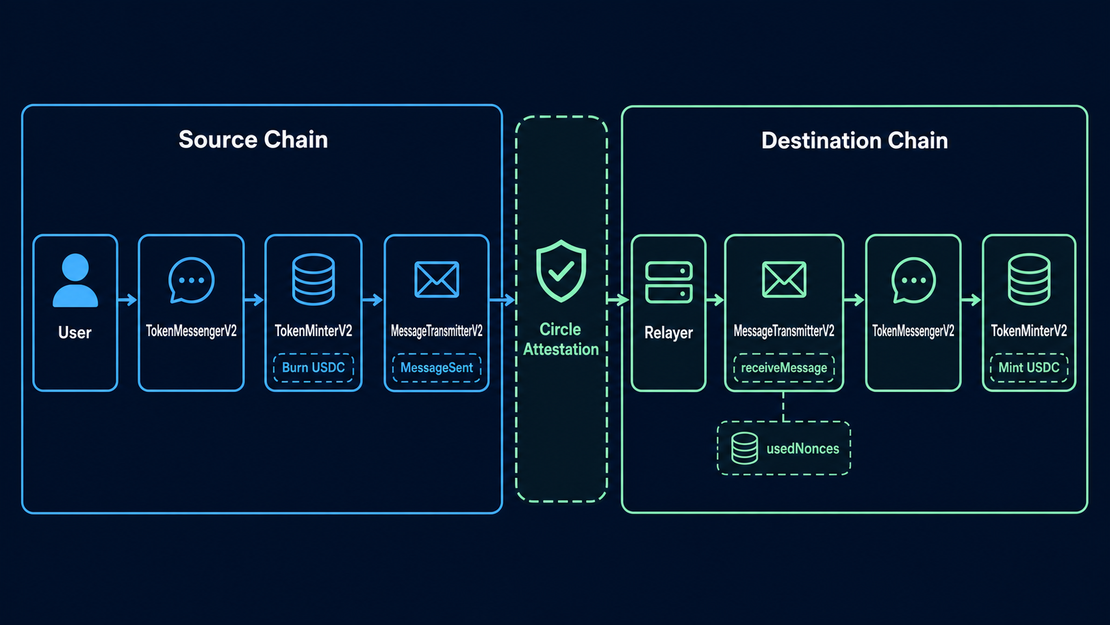
Circle CCTP V2 EVM Contracts: A Source-Code Walkthrough
- whackur
- Blockchain
- June 30, 2026
Bridge designs for moving USDC between chains come down to two families. Lock-and-mint parks the original token in a contract on the source chain and issues a wrapped version on the destination. Burn-and-mint destroys the token on the source chain outright and issues the same amount fresh on the destination. Circle’s CCTP (Cross-Chain Transfer Protocol) is the second kind.
Read More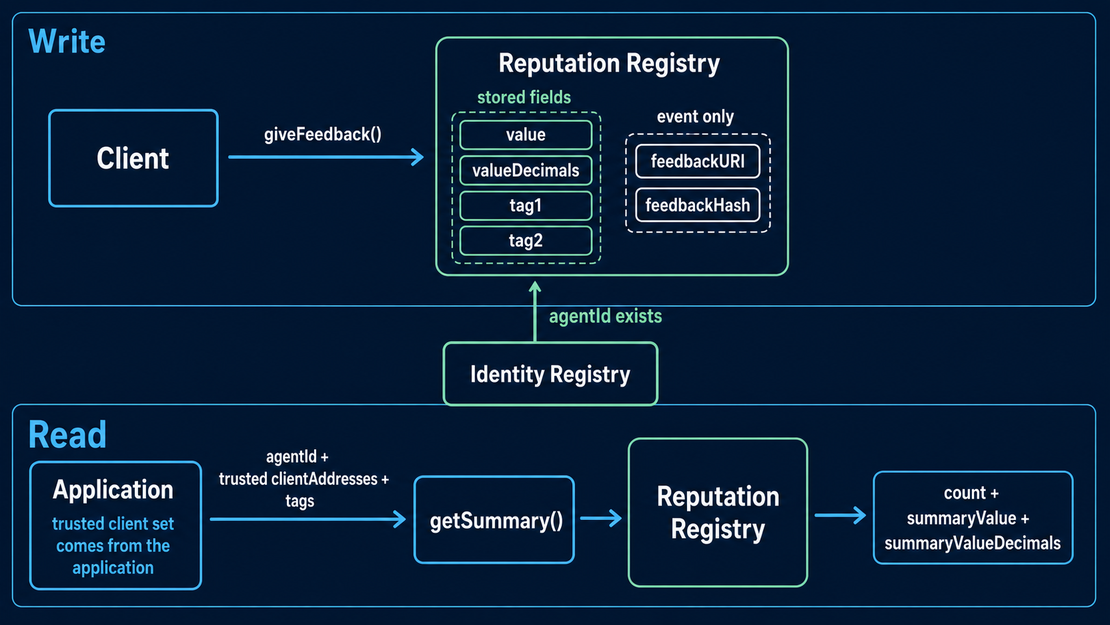
ERC-8004 Agent Reputation: On-Chain Registration and Lookup
- whackur
- Blockchain
- June 30, 2026
A prior post on this blog covered the ERC-8004/8126/8196 trust stack: three Ethereum registries that handle agent identity, reputation, and validation. If you want the conceptual overview first, start there. This post is about something narrower: how feedback actually gets written to the Reputation Registry, how to read it back, and what services are available today to browse and index that data.
Read More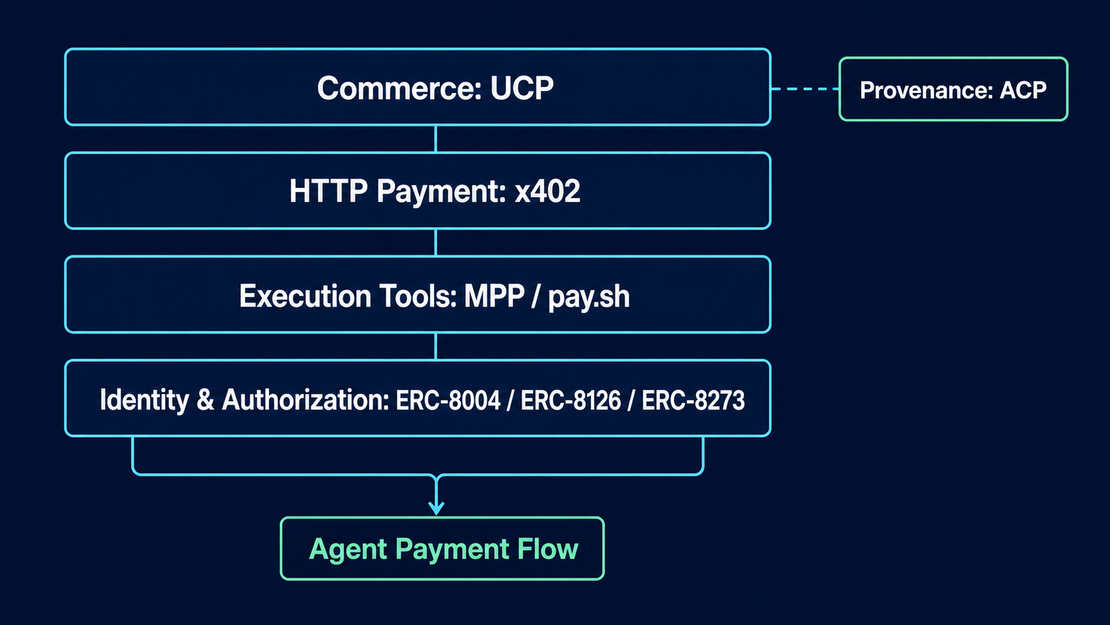
Agentic Payments in June 2026: x402, UCP, and MPP Implementation Progress
- whackur
- Blockchain
- June 30, 2026
Agentic payments in June 2026 moved from “can an agent pay” toward “who authorized the payment, how is it verified, and how is it traced.” The major open protocols (x402, UCP, MPP/pay.sh, and ACP) each had meaningful implementation changes. All figures and commit details below come from GitHub API, PyPI, and npm registry checks.
Read More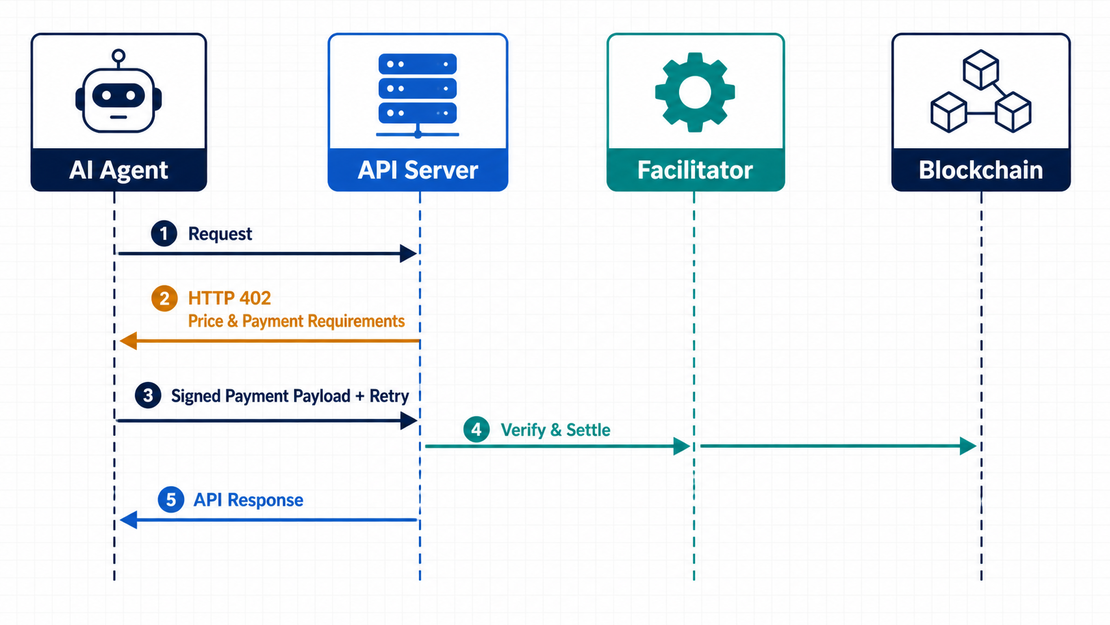
AI x Blockchain in 2026: Bittensor, DePIN, and Agent Finance
- whackur
- Blockchain
- June 30, 2026
“AI plus blockchain” spent most of the early 2020s as a marketing phrase. By mid-2026, it has organized into four distinct layers, each with its own competitive dynamics. Which projects have staying power, and what are the actual evaluation criteria at this point?
Read More
Figure: From HELOC Lender to Blockchain-Native Capital Markets
- whackur
- Blockchain
- June 30, 2026
Two companies go by the name Figure. One is Figure AI, the humanoid robotics company. The other is Figure Technology Solutions, which is what this post is about. They are unrelated.
Read More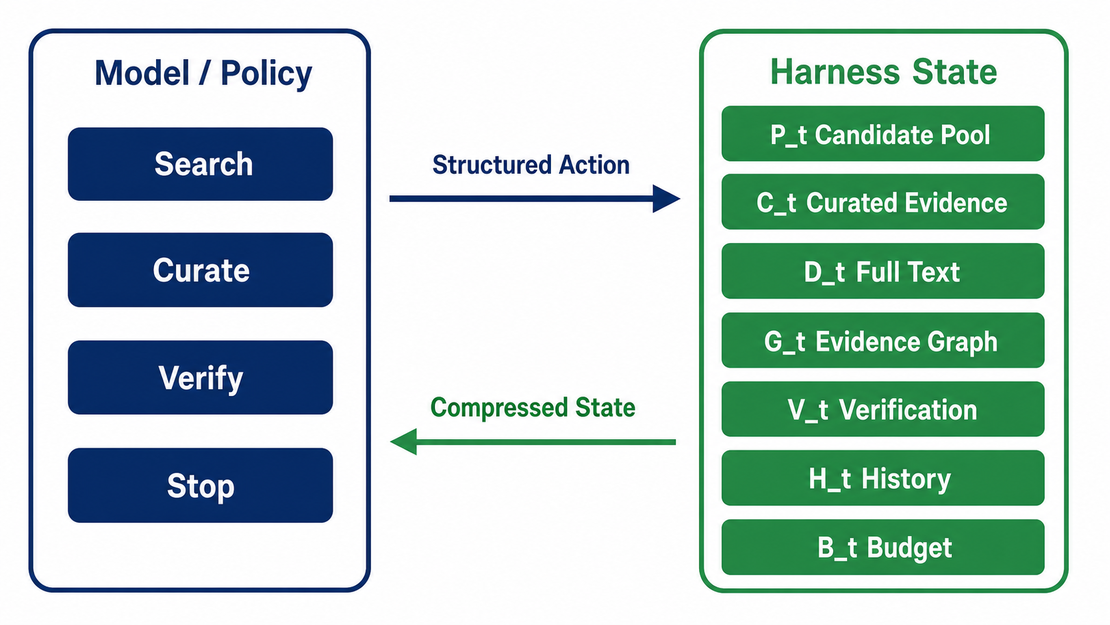
Harness-1: Teaching Search Agents to Offload State
Search agents and the state problem A search agent is an AI system that answers a question by iterating through multiple searches. Unlike a one-shot retrieval lookup, it reads intermediate results, adjusts its search strategy, compares candidate documents, and checks whether specific claims are actually supported by what it found. Tasks like analyzing financial filings, tracing multi-hop facts across sources, or interpreting complex regulations need this kind of iterative work. A single query won’t get you there.
Read MoreTags
- A2a
- Act
- Agent
- Agent-Debate
- Agent-Finance
- Agent-Harness
- Agent-Skills
- Agentic-Payments
- Ai-Agent
- Ai-Agents
- Ai-Architecture
- Ai-Blockchain
- Ai-Research
- Ai-Search
- Ai-Security
- Akash
- Anthropic
- Apify
- Base
- Benchmark
- Besu
- Bitcoin
- Bittensor
- Block-Access-Lists
- Canton
- Capital-Markets
- Ccip
- Cctp
- Chainlink
- Circle
- Coding
- Coding-Agent
- Coinbase
- Commerce
- Competition
- Compliance
- Context-Engineering
- Cross-Chain
- Cryptography
- Daml
- Data
- Data-Enclosure
- Data-Licensing
- Decentralized-Compute
- Depin
- Dex
- Diffusion-Policy
- Distillation
- Eip
- Eip-2780
- Eip-3009
- Eip-8037
- Eip-8038
- Emergent-Behavior
- Ensemble
- Enterprise-Blockchain
- Epbs
- Erc-8001
- Erc-8004
- Erc-8041
- Erc-8126
- Erc-8183
- Erc-8196
- Erc-8226
- Ethereum
- Evals
- Evaluation
- Evm
- Execution-Client
- Fhe
- Fido2
- Fintech
- Gas
- Glamsterdam
- Goldman-Sachs
- Google-Cloud
- Gpt-5-6
- Groth16
- Harness
- Heloc
- Hermes-Agent
- Identity
- Imitation-Learning
- Institutional-Finance
- Kimi
- Knowledge-Management
- Kya
- Langfuse
- Langgraph
- Lerobot
- Llama-Cpp
- Llm
- Llm-Agents
- Llm-as-Judge
- Llm-Observability
- Local-Llm
- Maci
- Math
- Mcp
- Memory
- Metadata
- Mev
- Moa
- Model-Routing
- Moe
- Mpp
- Mtp
- Multi-Agent
- Observability
- Okf
- Onchain
- Open-Source
- Open-Standard
- Opik
- Orderbook
- Passkey
- Physical-Ai
- Platforms
- Post-Quantum-Cryptography
- Post-Training
- Privacy
- Prompt-Engineering
- Provenance
- Python
- Qbft
- Quant-Finance
- Quantum-Computing
- Qwen
- Rag
- Reasoning
- Reinforcement-Learning
- Render
- Reputation
- Retrieval
- Reverse-Kl
- Rl
- Robot-Learning
- Rwa
- Search-Agent
- Security
- Self-Improvement
- Semaphore
- Settlement
- Skills
- Small-Language-Model
- Smart-Contract
- Smart-Contracts
- Smolvla
- Snark
- Software
- Solidity
- Sp1
- Stablecoin
- Stigmergy
- Swe-Bench
- Tokenization
- Tracing
- Trading
- Tutorial
- Ucp
- Uncensored
- Usdc
- Validators
- Vla
- Voting
- Wallet
- Webauthn
- X402
- Ylds
- Zero-Knowledge
- Zk-Proof
- Zk-Rollup