Blog Posts
- Home /
- Blog Posts

The A2A (Agent-to-Agent) Protocol: How Agents Delegate to Each Other, and Where Payments Plug In
- whackur
- Blockchain
- August 27, 2026
A2A (Agent2Agent) standardizes how to delegate work to an independently operated agent and receive progress and results. A client reads an Agent Card for capabilities, endpoints and authentication requirements, then tracks longer work as a Task. MCP connects each agent to tools and data; separate protocols such as AP2 and x402 handle purchase authorization and payment settlement. Collaborating over A2A requires neither a blockchain nor a wallet. A2A specification, division of responsibilities with MCP
Read More
gs-quant: How Goldman Sachs Open-Sourced Its Quant Code, and Where the Line Is
GS Quant is a Python toolkit that runs time-series calculations on data you supply and constructs financial instrument objects locally, while sending Marquee data queries, valuations, and risk calculations to authenticated services. Its Apache-2.0 code license is separate from permission to use those services and their data. Installing the package does not install Goldman Sachs’ valuation service, but it does provide analysis code you can run without an account. The distinction needs to be made function by function in the public source.
Read More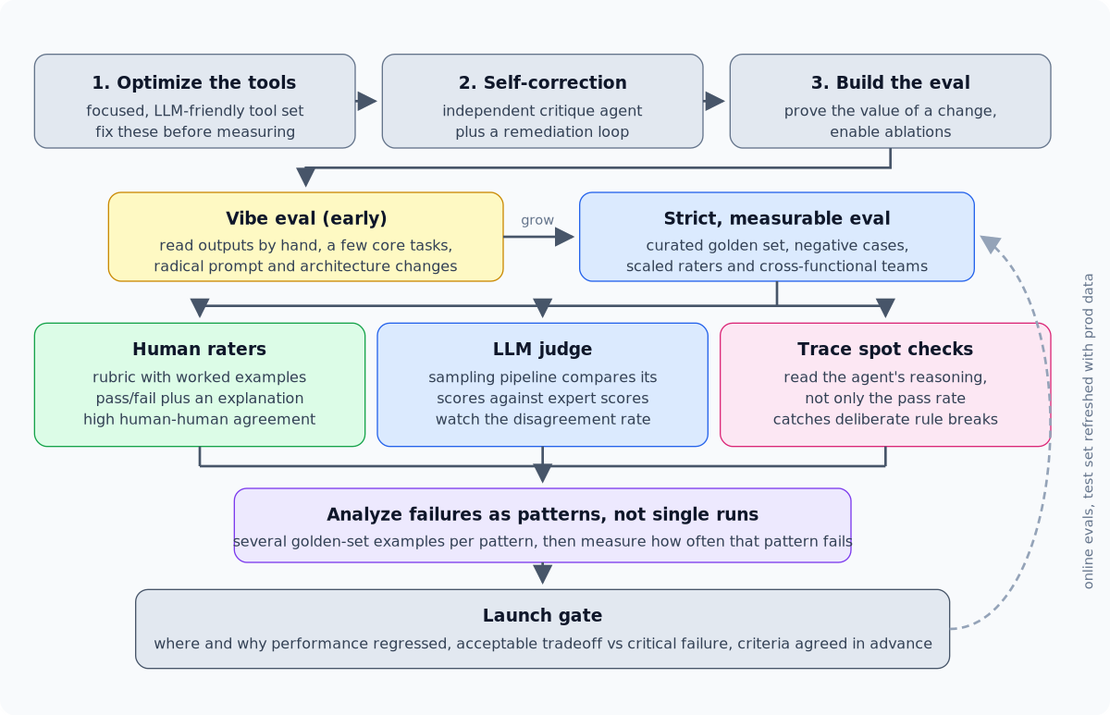
The Failure a Pass Rate Hides: How the YouTube Ads Team Runs Production Evals
The idea that a well-written prompt makes an agent behave holds up right until the demo ends. In production, the same prompt and the same input produce different results run to run. A case that passed yesterday fails today, and one that failed yesterday passes. Deciding whether that system is ready to ship takes measurement, not a feeling.
Read More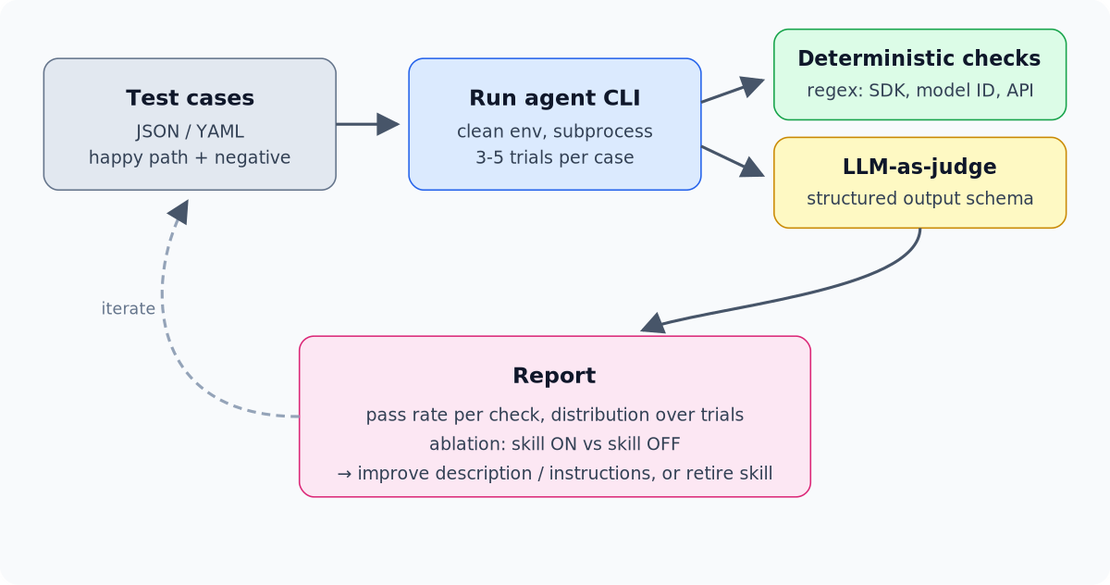
Don't Ship Agent Skills Without Evals: Philipp Schmid's Testing Method and SkillsBench
If you use a coding agent like Claude Code, Gemini CLI, or Codex, you eventually end up writing skills: Markdown files that hand the agent your team’s coding conventions, a specific SDK’s usage patterns, or a deployment procedure. The problem is that almost nobody tests them. We would never ship code without tests, yet skills, which directly change how an agent behaves, get shipped after a few manual runs and a gut-level “looks fine.”
Read More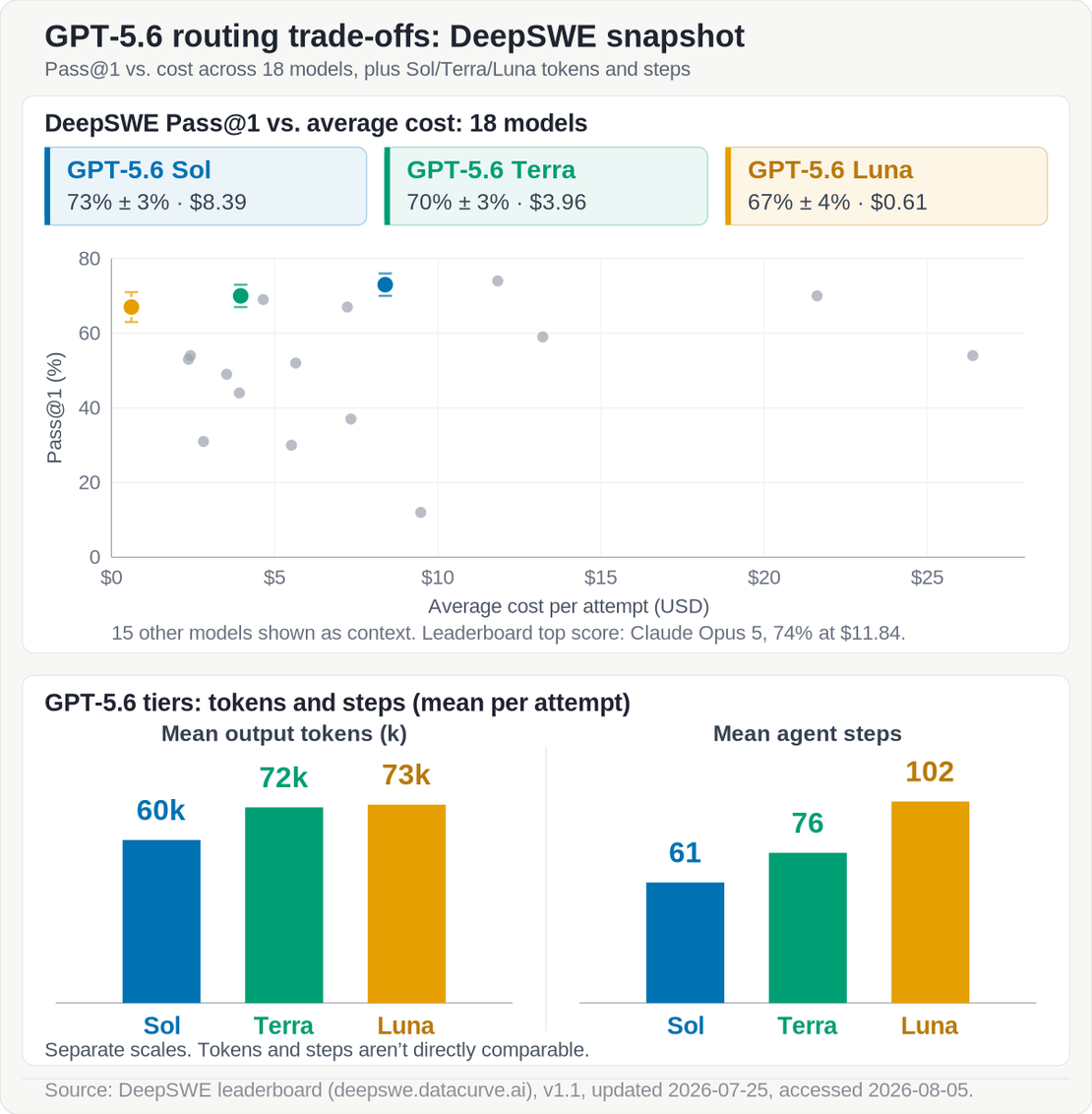
GPT-5.6 Sol, Terra, and Luna: A Model Routing Guide for Coding Agents
A claim like “Luna Max beats Terra High” circulates around GPT-5.6 discussions, and it does not hold up. Sol, Terra, and Luna are separate models, each a different capability tier. Max, high, xhigh, and ultra are settings within a given model that control how much reasoning time it uses and how many agents run in parallel. Collapsing a tier name and a settings name into one ranking compares two different axes as if they were one.
Read More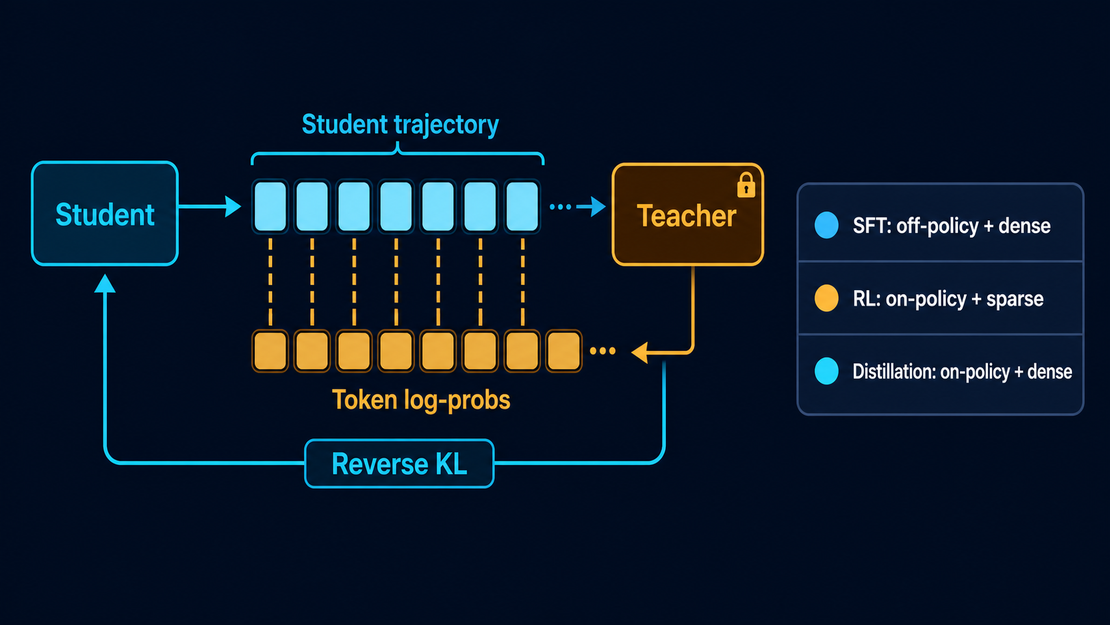
On-Policy Distillation: Closing the Gap Between RL and SFT
The two standard post-training methods each leave a gap. Supervised fine-tuning (SFT) has the student imitate sequences a teacher already produced, but training happens on states the student may never actually visit, so errors compound over long generations. Reinforcement learning (RL) samples from the student’s own rollouts, which fixes that mismatch, but the reward is usually a single bit or two per episode. A post Thinking Machines Lab published in October 2025 proposes combining the two: sample trajectories from the student, then have a strong teacher score every token in that trajectory.
Read More
AI Self-Improvement Starts Outside the Model
An AI agent can improve its behavior across runs while its model weights stay unchanged. It can diagnose failures in execution traces, revise its prompts, memory, tools, or workflow, and retain changes that pass a separate evaluation. Persistent, tested changes distinguish harness improvement from simply making more attempts. Darwin Gödel Machine (DGM) changes a coding agent’s code; GEPA changes prompts; Reflexion changes the memory supplied to later trials. Each changes the system around a model rather than retraining that model. (DGM, GEPA, Reflexion)
Read More
Bitcoin, Ethereum, and the Quantum Computing Question
- whackur
- Blockchain
- July 5, 2026
Quantum computers are a long-term threat to the signatures that protect Bitcoin and Ethereum. The public research checked on October 16, 2026 (KST), however, estimates resources for future error-corrected machines; it does not demonstrate recovery of a real secp256k1 private key on quantum hardware. Risk depends on how long a public key is exposed, how long an attack takes, and whether authentication and authority can migrate first. Bitcoin’s defenses remain proposals, while Ethereum is working on a transition across accounts, consensus, and data. Resource-estimation paper, BIP-360, Ethereum Foundation transition plan
Read More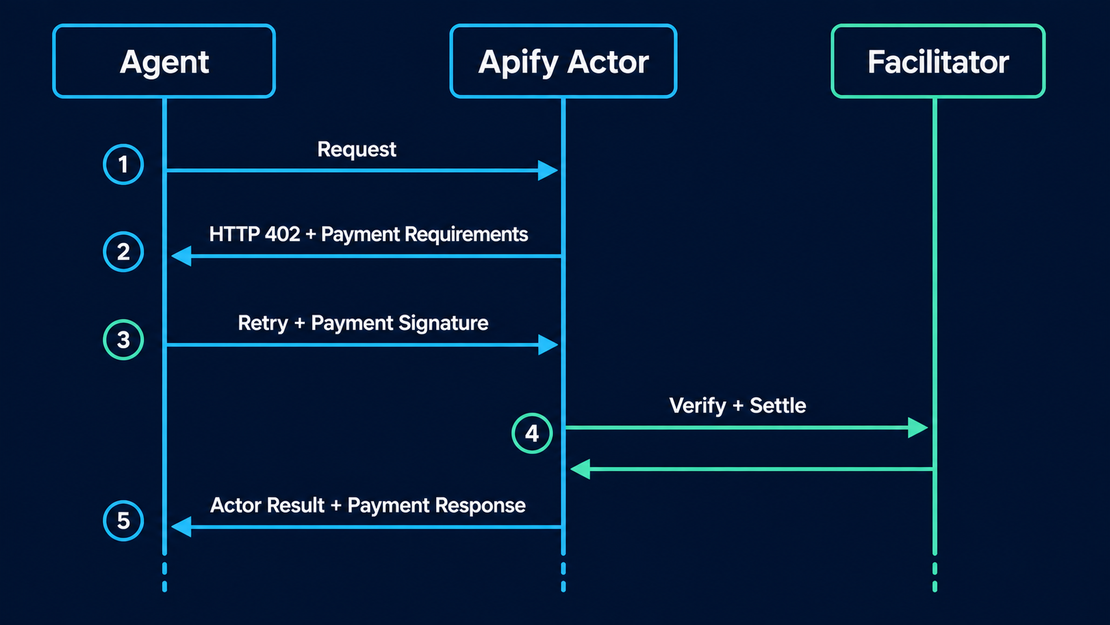
Apify x402 and Coinbase Wallets, in Depth: How Agents Buy Web Automation Tools Directly
- whackur
- Blockchain
- July 5, 2026
Apify, the web scraping platform, announced x402 support: AI agents can now run more than 20,000 Apify Actors by paying with USDC on Base, with no Apify account and no API key. Apify frames the prior x402 ecosystem as roughly 2,000 endpoints, so by its own count this integration expanded the paid-tool surface by about 10x.
Read More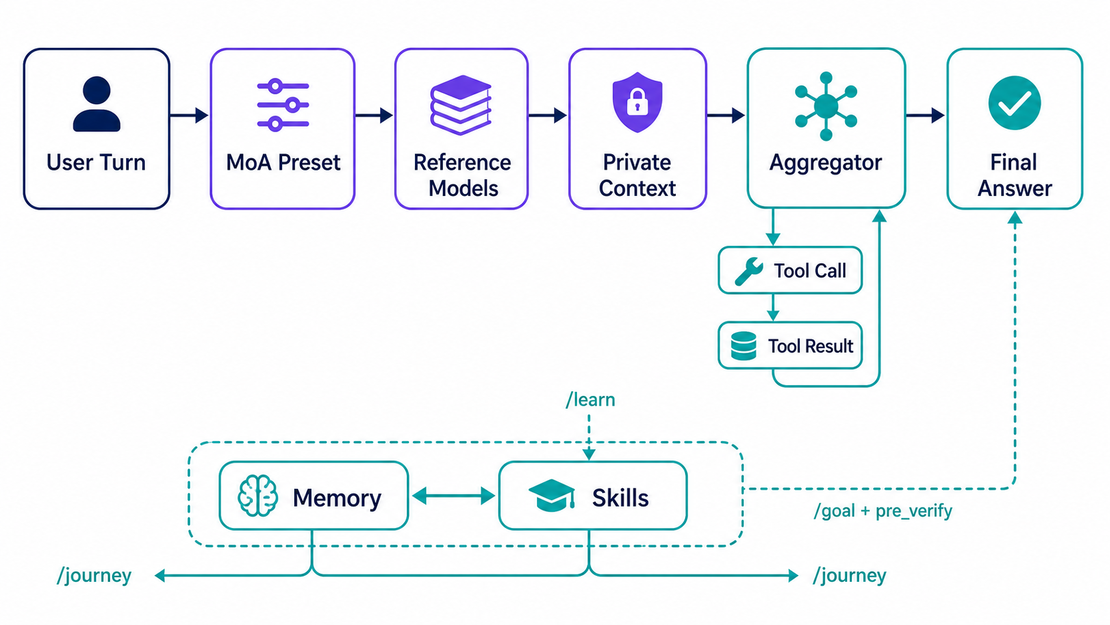
Hermes Agent v0.18: When a Self-Improving Agent Gets MoA
Nous Research’s open-source agent Hermes Agent shipped v0.18.0 on July 1, 2026. The release notes call it “The Judgment Release.” Reading this as a routine feature update misses the point. The official docs describe Hermes Agent as “the self-improving AI agent,” and the project is built around a loop that accumulates memory and skills the more it gets used. This post covers how that loop was refined in v0.18, and what role Mixture of Agents (MoA), now a first-class model choice in the same release, plays inside it.
Read MoreTags
- A2a
- Act
- Agent
- Agent-Debate
- Agent-Finance
- Agent-Harness
- Agent-Skills
- Agentic-Payments
- Ai-Agent
- Ai-Agents
- Ai-Architecture
- Ai-Blockchain
- Ai-Research
- Ai-Search
- Ai-Security
- Akash
- Anthropic
- Apify
- Base
- Benchmark
- Besu
- Bitcoin
- Bittensor
- Block-Access-Lists
- Canton
- Capital-Markets
- Ccip
- Cctp
- Chainlink
- Circle
- Coding
- Coding-Agent
- Coinbase
- Commerce
- Competition
- Compliance
- Context-Engineering
- Cross-Chain
- Cryptography
- Daml
- Data
- Data-Enclosure
- Data-Licensing
- Decentralized-Compute
- Depin
- Dex
- Diffusion-Policy
- Distillation
- Eip
- Eip-2780
- Eip-3009
- Eip-8037
- Eip-8038
- Emergent-Behavior
- Ensemble
- Enterprise-Blockchain
- Epbs
- Erc-8001
- Erc-8004
- Erc-8041
- Erc-8126
- Erc-8183
- Erc-8196
- Erc-8226
- Ethereum
- Evals
- Evaluation
- Evm
- Execution-Client
- Fhe
- Fido2
- Fintech
- Gas
- Glamsterdam
- Goldman-Sachs
- Google-Cloud
- Gpt-5-6
- Groth16
- Harness
- Heloc
- Hermes-Agent
- Identity
- Imitation-Learning
- Institutional-Finance
- Kimi
- Knowledge-Management
- Kya
- Langfuse
- Langgraph
- Lerobot
- Llama-Cpp
- Llm
- Llm-Agents
- Llm-as-Judge
- Llm-Observability
- Local-Llm
- Maci
- Math
- Mcp
- Memory
- Metadata
- Mev
- Moa
- Model-Routing
- Moe
- Mpp
- Mtp
- Multi-Agent
- Observability
- Okf
- Onchain
- Open-Source
- Open-Standard
- Opik
- Orderbook
- Passkey
- Physical-Ai
- Platforms
- Post-Quantum-Cryptography
- Post-Training
- Privacy
- Prompt-Engineering
- Provenance
- Python
- Qbft
- Quant-Finance
- Quantum-Computing
- Qwen
- Rag
- Reasoning
- Reinforcement-Learning
- Render
- Reputation
- Retrieval
- Reverse-Kl
- Rl
- Robot-Learning
- Rwa
- Search-Agent
- Security
- Self-Improvement
- Semaphore
- Settlement
- Skills
- Small-Language-Model
- Smart-Contract
- Smart-Contracts
- Smolvla
- Snark
- Software
- Solidity
- Sp1
- Stablecoin
- Stigmergy
- Swe-Bench
- Tokenization
- Tracing
- Trading
- Tutorial
- Ucp
- Uncensored
- Usdc
- Validators
- Vla
- Voting
- Wallet
- Webauthn
- X402
- Ylds
- Zero-Knowledge
- Zk-Proof
- Zk-Rollup