
whackur
Hands-on notes on AI, blockchain (Web3 · Solidity), local LLMs, and physical AI.

Ethereum Glamsterdam Upgrade: ePBS, BALs, Every EIP and Operational Changes
- whackur
- Blockchain
- October 17, 2026
Glamsterdam aims to expand Ethereum L1 capacity by changing both how blocks are built and how receiving nodes validate them. Enshrined proposer-builder separation (ePBS) brings commitments, payload reveals and proposer payments into the protocol. Block-level access lists (BALs) carry actual state accesses and post-transaction changes so receiving nodes can parallelize reads and validation. Gas repricing and networking changes support that effort. These changes do not guarantee lower fees for every transaction or a particular TPS figure. EIP-7773 defines the scope; EIP-7732 and EIP-7928 define the two central mechanisms.
Read More
Technology Moats in the AI Era
Building software and making money are different things I recently attended an AI conference. As I looked at the many products and demonstrations, one question kept coming back to me.
Read More
Data Enclosure and Platform Concentration in the AI Era
Data enclosure in the AI era is about platforms deciding who may reuse data, and for what purpose. Some end APIs; others supply selected AI companies under contract or charge for usage. These cases show access conditions being reorganized. They do not, by themselves, establish monopoly or unlawful conduct by any company.
Read More
Transferring Tokens with Canton Daml: State and Authorization Compared with Solidity
- whackur
- Blockchain
- October 15, 2026
When Alice sends all 100 token units to Bob, Bob becomes the person who can spend them next. The Solidity example updates balances by address; the Daml example for Canton consumes Alice’s holding contract and creates Bob’s. They express the same transfer outcome with different units of state and different authorization checks.
Read More
Understanding Besu: From Ethereum Execution to Bank Token Payments
- whackur
- Blockchain
- October 15, 2026
Besu is a Java Ethereum client that executes smart contracts and verifies and stores their results. Banks can use it to build a ledger that handles deposit tokens alongside interbank settlement assets. It also serves as an execution client on Ethereum mainnet. These deployments share execution technology, while the issuers of money and the parties that finalize the ledger depend on the network. Besu documentation
Read More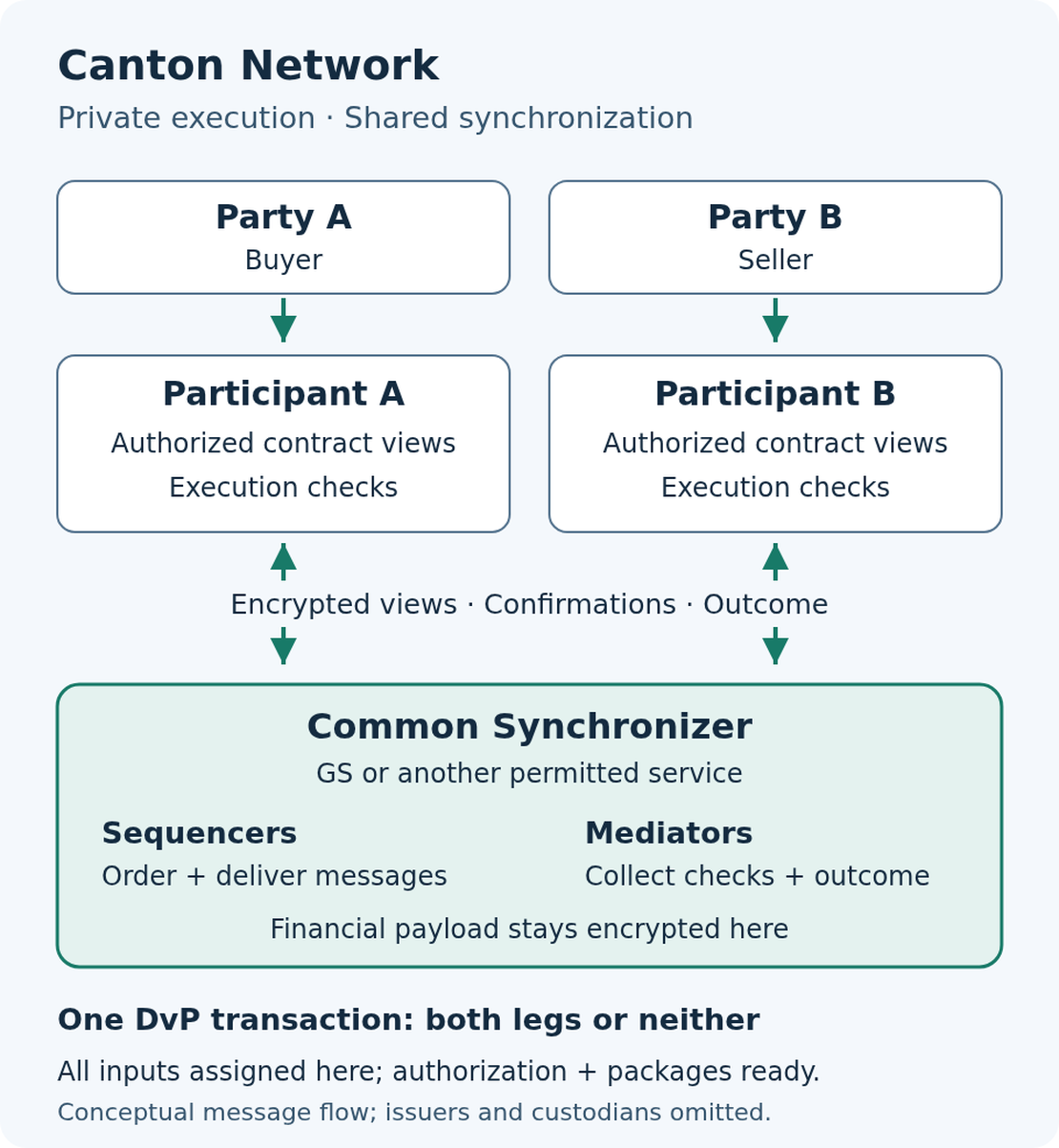
Understanding Canton Network: Financial Privacy, Atomic Settlement, and Institutional Adoption
- whackur
- Blockchain
- October 15, 2026
Buying a security changes records in several places. A trading venue records the execution, a custodian records the securities position, and a bank maintains the cash ledger. Each institution has its own account of the transaction. Reconciliation checks that amounts, rights, and processing states agree. A single public database might appear to simplify the problem, but institutions cannot publish their customers’ balances and trading strategies to everyone operating the infrastructure.
Read More
Glamsterdam's New Gas Model: EIP-8037 State Gas, EIP-8038 Access Costs, EIP-2780 Intrinsic Gas
- whackur
- Blockchain
- October 15, 2026
Glamsterdam’s three gas proposals make new persistent state more expensive and raise the cost of updating existing state, while lowering the base cost of some transactions that do less work. A fresh cold storage write has specified components of 12,100 execution gas plus 97,920 state gas; the first cold change away from an existing slot’s nonzero transaction-start value costs 12,100 execution gas and no state gas. Both still draw on the transaction’s single gasLimit, but gasleft() does not report the separate state-gas reservoir. These are specification costs, not measured Solidity function totals or an announcement that the rules are active on mainnet. EIP-8037, EIP-8038 and EIP-2780 define the changes together.
Read More
Why did Anthropic publish its report on alleged Kimi-to-Claude routing?
If sensitive information was reaching Claude, why would Anthropic reveal the route? A model provider may gain more from limiting unauthorized use and alerting customers to a data-handling problem than from continuing to observe the inputs. Answering a competitor’s users consumes compute and may produce training material for that competitor. Publication also reaches users and enterprise buyers whom account bans alone cannot inform. These incentives explain why disclosure can make sense; they do not establish how Anthropic made its internal decision.
Read More
SwarmWorld: LLM Agents That Cooperate Without Talking, and Technology That Outlives Them
In SwarmWorld, agents can continue one another’s work without talking by observing persistent devices and changes to their shared environment. That shared world helped them build collections of technologies serving several functions, but did not guarantee the best individual device. The MIT researchers’ paper demonstrates collaboration through accumulating functional artifacts inside a specified simulator. It does not establish the invention of real materials or a universal advantage for real-world multi-agent systems.
Read More
Know Your Agent (KYA): AI Agent Identity, the Standards Race, and What Is Actually On-Chain
- whackur
- Blockchain
- August 27, 2026
An identity credential or an on-chain registration number is insufficient grounds to let an AI agent spend money or access data. Identifying the agent, authenticating the requester, checking its authority for this action, and deciding how much to trust past feedback are separate checks. Know Your Agent (KYA) groups these concerns under one name. ERC-8004 supplies identifiers and public trust signals; Visa TAP and identity-verification vendors offer other ways to check requests, organizations or people. The service receiving the request still decides whether to grant access. The ERC-8004 specification and Trulioo’s product description both limit what registration or verification establishes.
Read More
The A2A (Agent-to-Agent) Protocol: How Agents Delegate to Each Other, and Where Payments Plug In
- whackur
- Blockchain
- August 27, 2026
A2A (Agent2Agent) standardizes how to delegate work to an independently operated agent and receive progress and results. A client reads an Agent Card for capabilities, endpoints and authentication requirements, then tracks longer work as a Task. MCP connects each agent to tools and data; separate protocols such as AP2 and x402 handle purchase authorization and payment settlement. Collaborating over A2A requires neither a blockchain nor a wallet. A2A specification, division of responsibilities with MCP
Read More
gs-quant: How Goldman Sachs Open-Sourced Its Quant Code, and Where the Line Is
GS Quant is a Python toolkit that runs time-series calculations on data you supply and constructs financial instrument objects locally, while sending Marquee data queries, valuations, and risk calculations to authenticated services. Its Apache-2.0 code license is separate from permission to use those services and their data. Installing the package does not install Goldman Sachs’ valuation service, but it does provide analysis code you can run without an account. The distinction needs to be made function by function in the public source.
Read More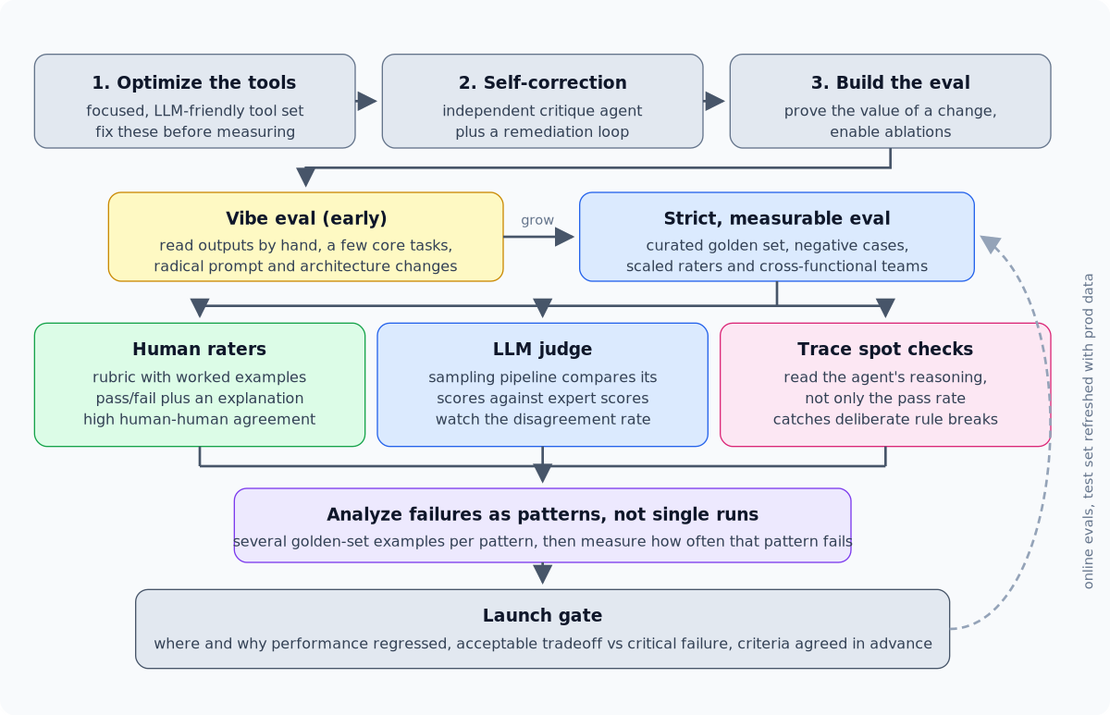
The Failure a Pass Rate Hides: How the YouTube Ads Team Runs Production Evals
The idea that a well-written prompt makes an agent behave holds up right until the demo ends. In production, the same prompt and the same input produce different results run to run. A case that passed yesterday fails today, and one that failed yesterday passes. Deciding whether that system is ready to ship takes measurement, not a feeling.
Read More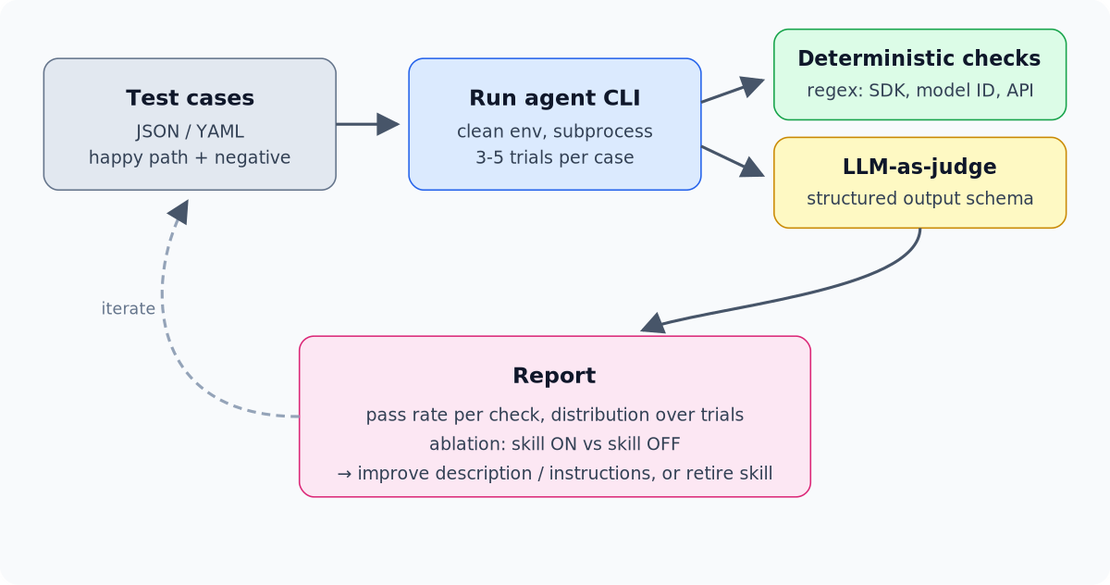
Don't Ship Agent Skills Without Evals: Philipp Schmid's Testing Method and SkillsBench
If you use a coding agent like Claude Code, Gemini CLI, or Codex, you eventually end up writing skills: Markdown files that hand the agent your team’s coding conventions, a specific SDK’s usage patterns, or a deployment procedure. The problem is that almost nobody tests them. We would never ship code without tests, yet skills, which directly change how an agent behaves, get shipped after a few manual runs and a gut-level “looks fine.”
Read More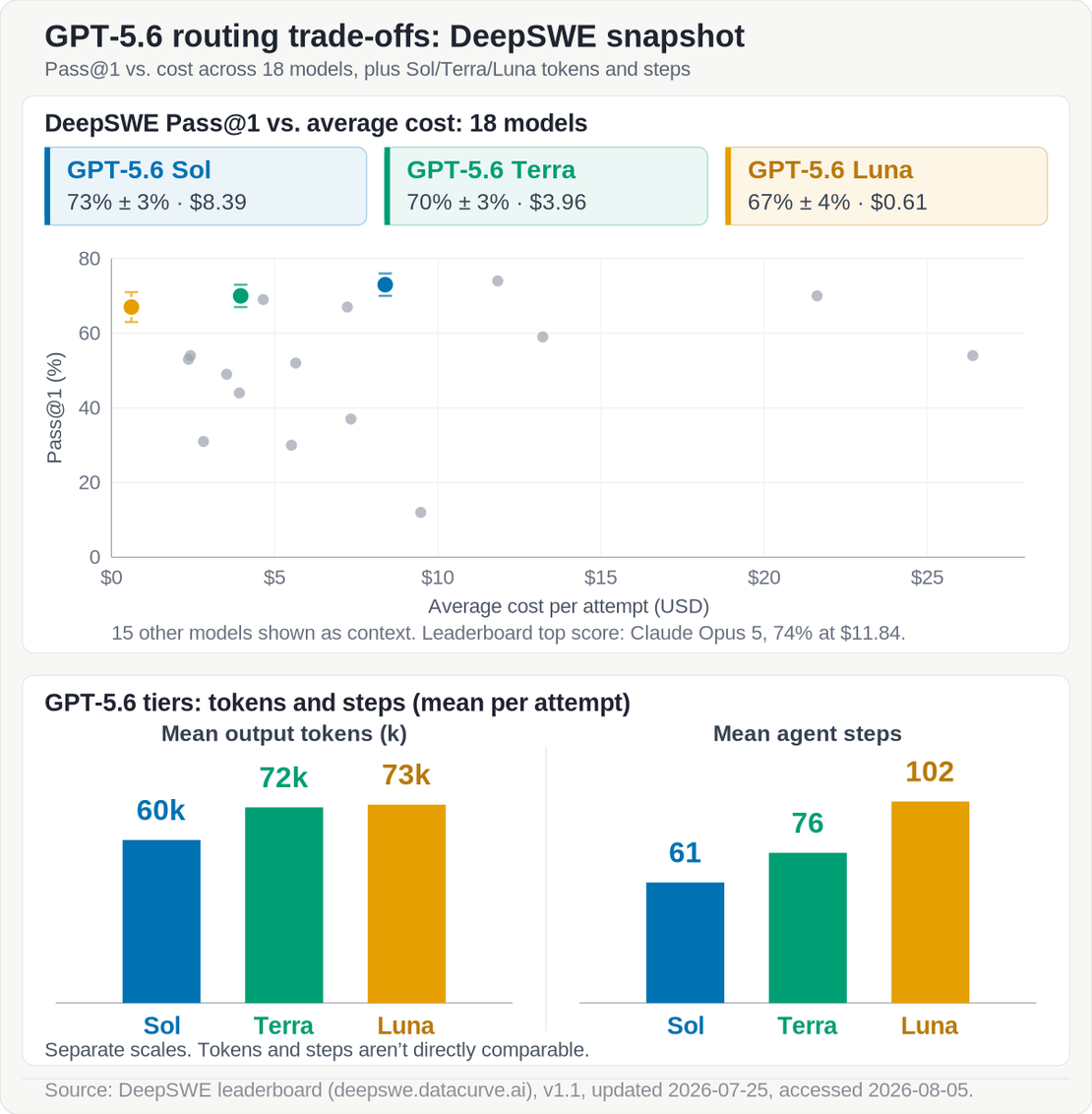
GPT-5.6 Sol, Terra, and Luna: A Model Routing Guide for Coding Agents
A claim like “Luna Max beats Terra High” circulates around GPT-5.6 discussions, and it does not hold up. Sol, Terra, and Luna are separate models, each a different capability tier. Max, high, xhigh, and ultra are settings within a given model that control how much reasoning time it uses and how many agents run in parallel. Collapsing a tier name and a settings name into one ranking compares two different axes as if they were one.
Read More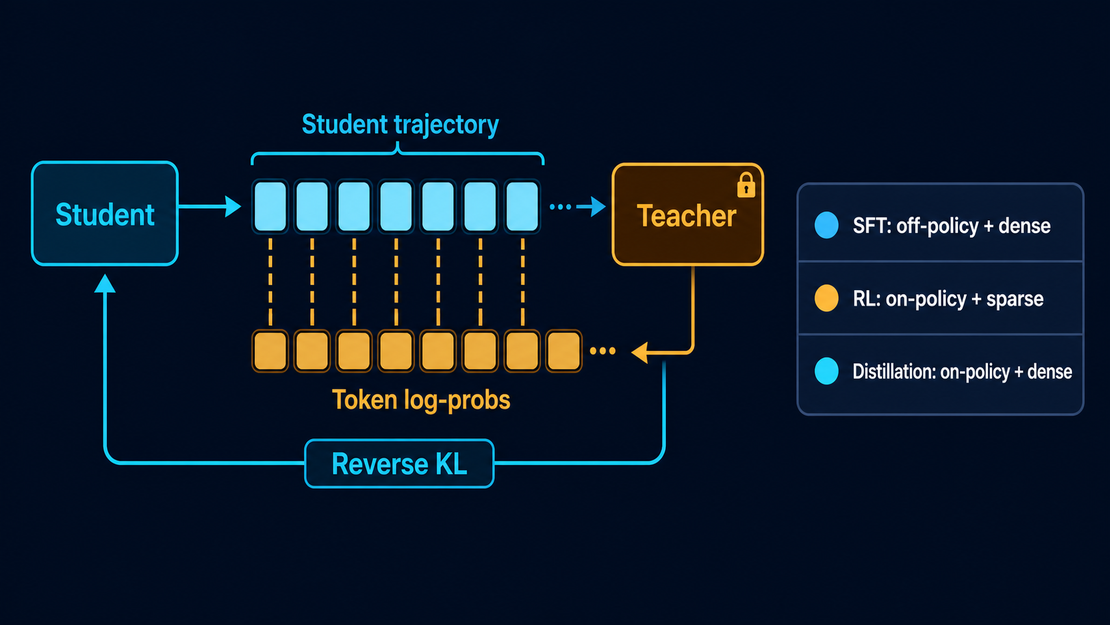
On-Policy Distillation: Closing the Gap Between RL and SFT
The two standard post-training methods each leave a gap. Supervised fine-tuning (SFT) has the student imitate sequences a teacher already produced, but training happens on states the student may never actually visit, so errors compound over long generations. Reinforcement learning (RL) samples from the student’s own rollouts, which fixes that mismatch, but the reward is usually a single bit or two per episode. A post Thinking Machines Lab published in October 2025 proposes combining the two: sample trajectories from the student, then have a strong teacher score every token in that trajectory.
Read More
AI Self-Improvement Starts Outside the Model
An AI agent can improve its behavior across runs while its model weights stay unchanged. It can diagnose failures in execution traces, revise its prompts, memory, tools, or workflow, and retain changes that pass a separate evaluation. Persistent, tested changes distinguish harness improvement from simply making more attempts. Darwin Gödel Machine (DGM) changes a coding agent’s code; GEPA changes prompts; Reflexion changes the memory supplied to later trials. Each changes the system around a model rather than retraining that model. (DGM, GEPA, Reflexion)
Read More
Bitcoin, Ethereum, and the Quantum Computing Question
- whackur
- Blockchain
- July 5, 2026
Quantum computers are a long-term threat to the signatures that protect Bitcoin and Ethereum. The public research checked on October 16, 2026 (KST), however, estimates resources for future error-corrected machines; it does not demonstrate recovery of a real secp256k1 private key on quantum hardware. Risk depends on how long a public key is exposed, how long an attack takes, and whether authentication and authority can migrate first. Bitcoin’s defenses remain proposals, while Ethereum is working on a transition across accounts, consensus, and data. Resource-estimation paper, BIP-360, Ethereum Foundation transition plan
Read More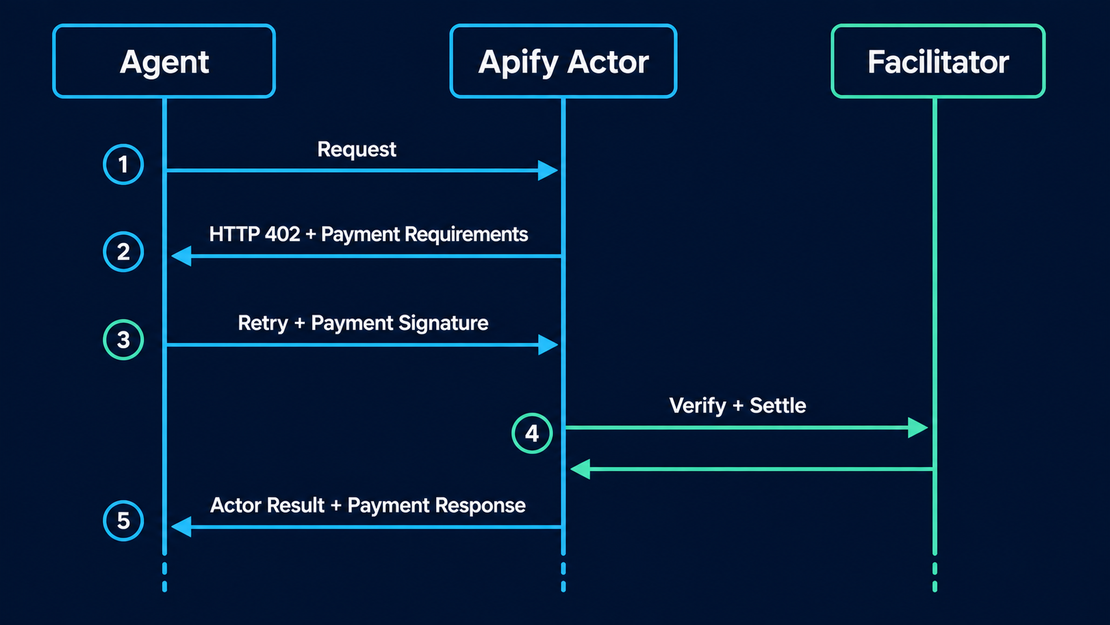
Apify x402 and Coinbase Wallets, in Depth: How Agents Buy Web Automation Tools Directly
- whackur
- Blockchain
- July 5, 2026
Apify, the web scraping platform, announced x402 support: AI agents can now run more than 20,000 Apify Actors by paying with USDC on Base, with no Apify account and no API key. Apify frames the prior x402 ecosystem as roughly 2,000 endpoints, so by its own count this integration expanded the paid-tool surface by about 10x.
Read More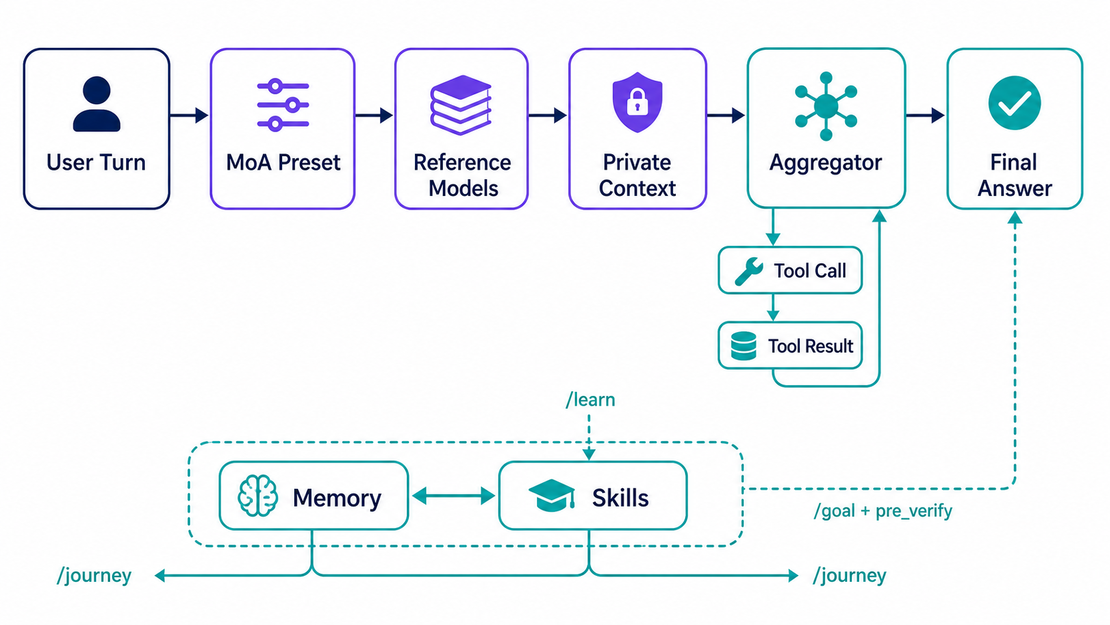
Hermes Agent v0.18: When a Self-Improving Agent Gets MoA
Nous Research’s open-source agent Hermes Agent shipped v0.18.0 on July 1, 2026. The release notes call it “The Judgment Release.” Reading this as a routine feature update misses the point. The official docs describe Hermes Agent as “the self-improving AI agent,” and the project is built around a loop that accumulates memory and skills the more it gets used. This post covers how that loop was refined in v0.18, and what role Mixture of Agents (MoA), now a first-class model choice in the same release, plays inside it.
Read More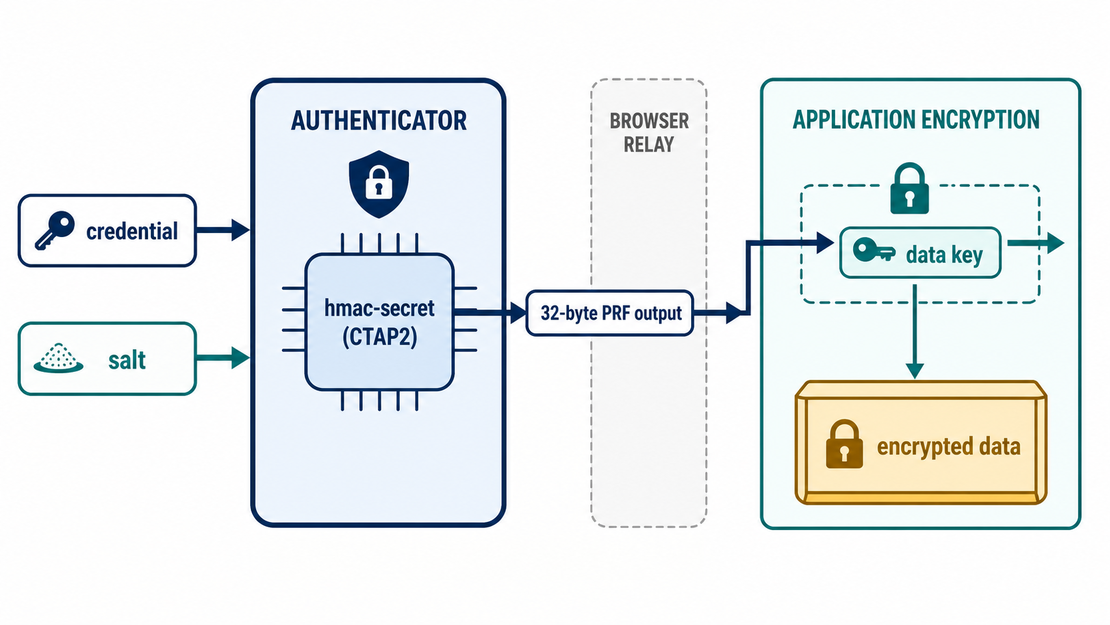
Pulling Encryption Keys Out of Passkeys with the WebAuthn PRF Extension
Passkeys show up on login screens everywhere now. What’s less well known is that the same authenticator holding your passkey can also hand out key material for encryption, not just authentication. The prf extension in WebAuthn is that path. This post covers what PRF actually returns, how it relates to the CTAP2 hmac-secret extension, what you still have to build yourself before it’s usable for real encryption, and where device and platform support stand as of 2026.
Read More
TradingAgents: Reading the Paper and Code Behind an LLM Trading Desk
TradingAgents is a research framework in which several LLM agents analyze evidence, challenge a proposal, and produce a judgment about one instrument with supporting reports. In the current code, the risk team reviews the Trader’s proposal and the Portfolio Manager assigns the final rating. The paper’s high backtest returns do not establish that these ratings translate into live profits. The current evaluation code explicitly excludes order fills and an account cash ledger. Final decision, evaluation scope
Read More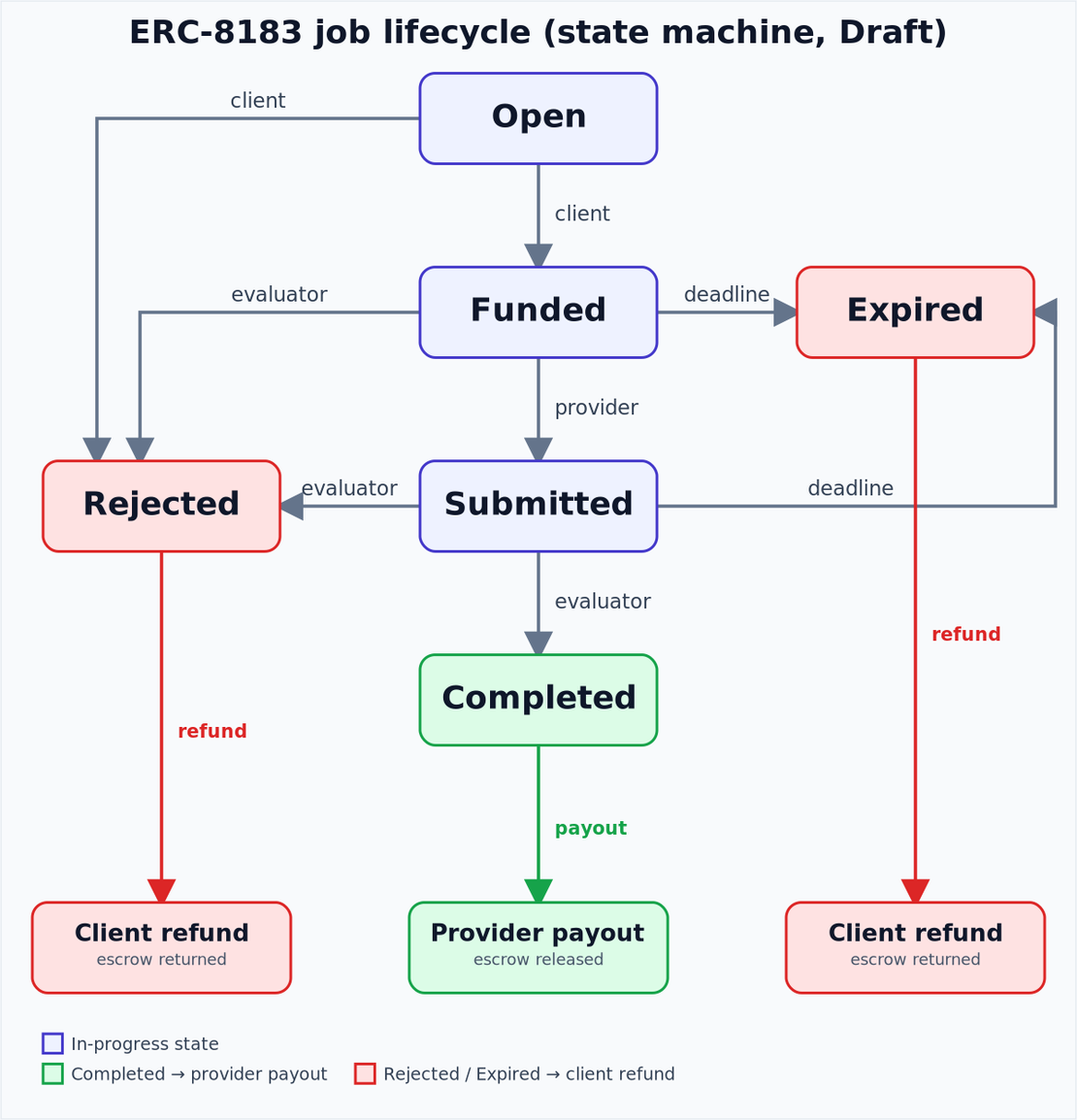
AI Agent Commerce and Coordination: ERC-8183, ERC-8226, ERC-8001, ERC-8041
- whackur
- Blockchain
- July 1, 2026
The ERC-8004/8126/8196 trust stack defines three layers: agent identity, security verification, and policy-constrained execution. It identifies an agent, scores its risk, and keeps it acting within the limits an owner has set. All of that answers one question: can I trust this agent to act on my behalf?
Read More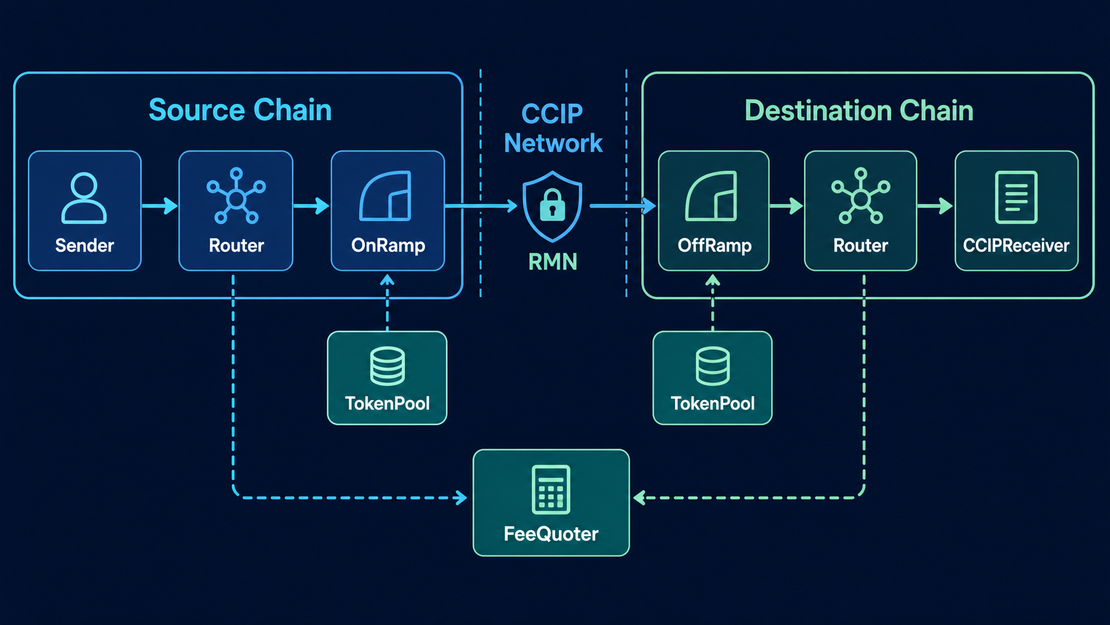
Chainlink CCIP EVM Contracts: Architecture from Source Code
- whackur
- Blockchain
- June 30, 2026
EVM chains are isolated by design. A contract on Arbitrum has no native way to call a contract on Base, and sending USDC from Ethereum Mainnet to Polygon is not a built-in operation. Cross-chain bridges filled that gap for years, but the category has seen repeated security incidents that highlight how wide the attack surface is.
Read More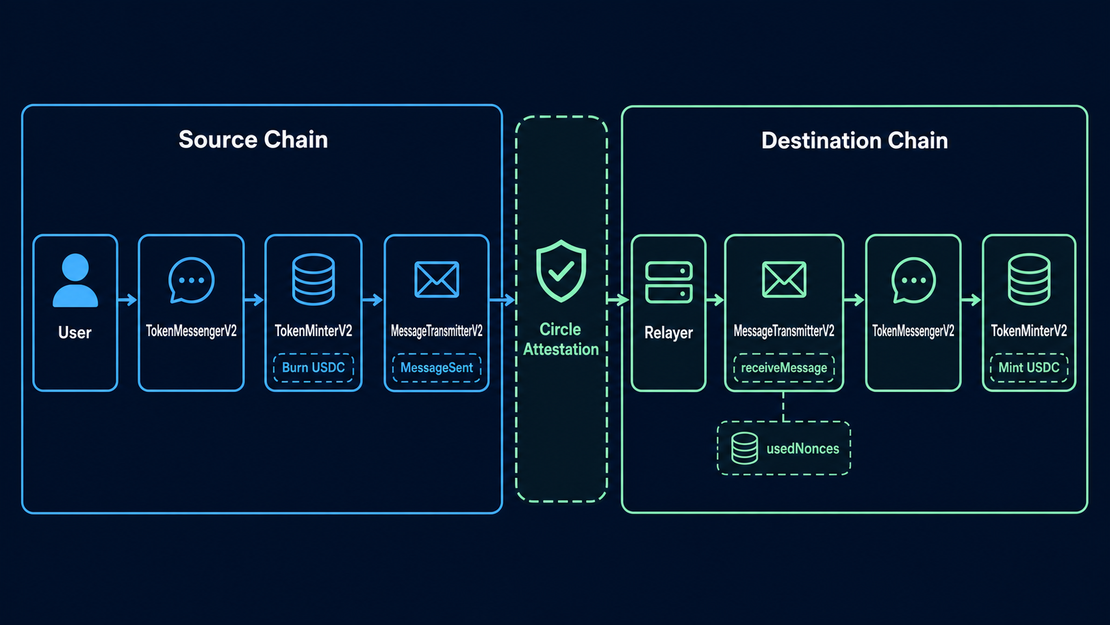
Circle CCTP V2 EVM Contracts: A Source-Code Walkthrough
- whackur
- Blockchain
- June 30, 2026
Bridge designs for moving USDC between chains come down to two families. Lock-and-mint parks the original token in a contract on the source chain and issues a wrapped version on the destination. Burn-and-mint destroys the token on the source chain outright and issues the same amount fresh on the destination. Circle’s CCTP (Cross-Chain Transfer Protocol) is the second kind.
Read More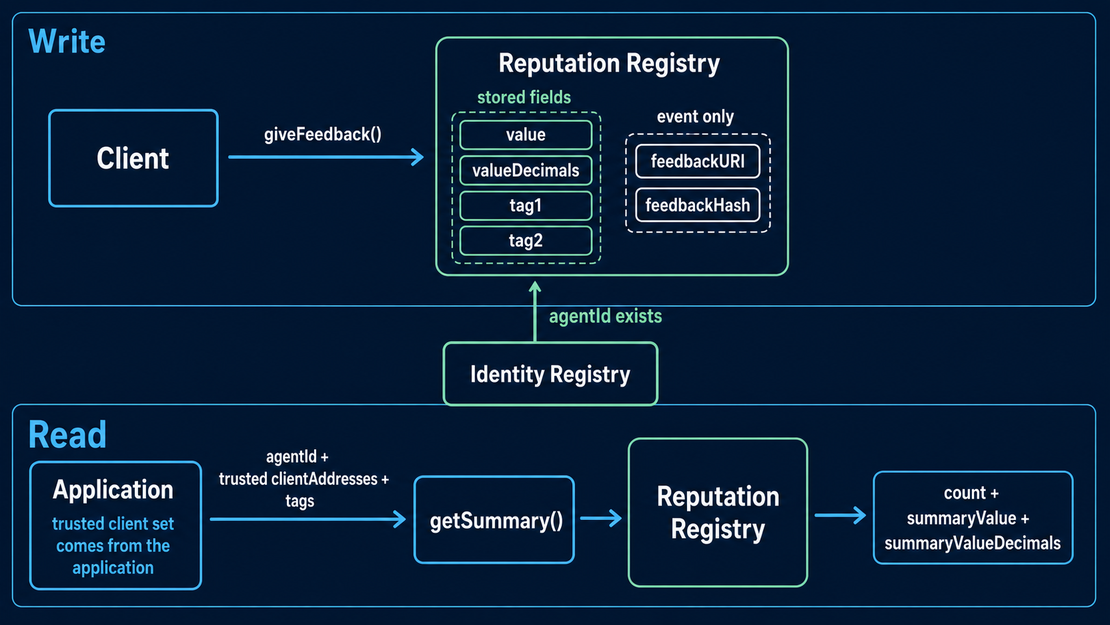
ERC-8004 Agent Reputation: On-Chain Registration and Lookup
- whackur
- Blockchain
- June 30, 2026
A prior post on this blog covered the ERC-8004/8126/8196 trust stack: three Ethereum registries that handle agent identity, reputation, and validation. If you want the conceptual overview first, start there. This post is about something narrower: how feedback actually gets written to the Reputation Registry, how to read it back, and what services are available today to browse and index that data.
Read More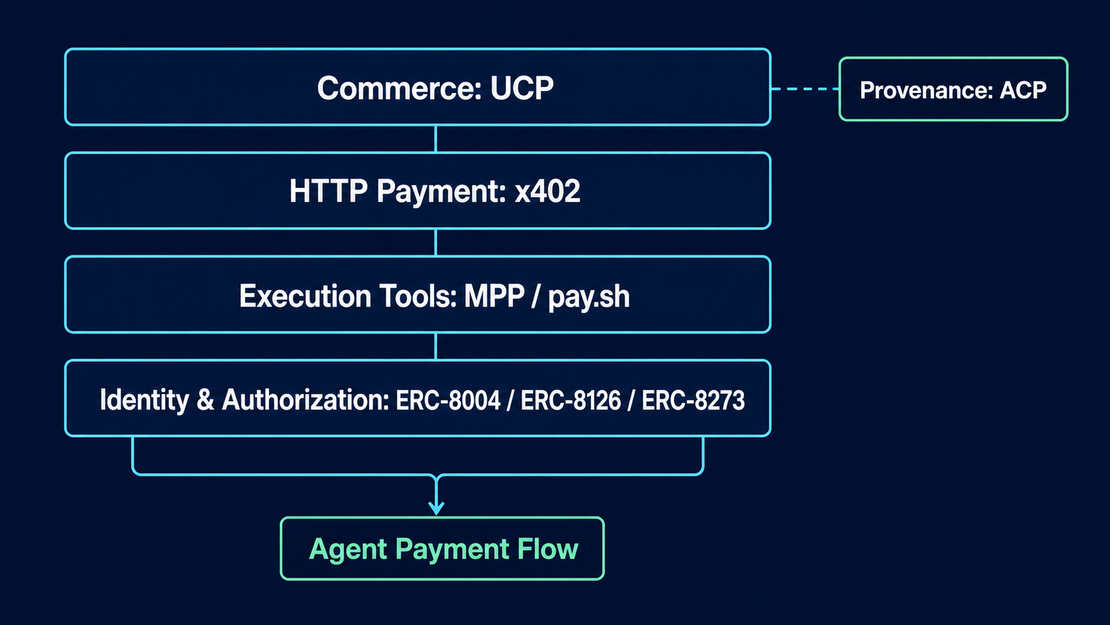
Agentic Payments in June 2026: x402, UCP, and MPP Implementation Progress
- whackur
- Blockchain
- June 30, 2026
Agentic payments in June 2026 moved from “can an agent pay” toward “who authorized the payment, how is it verified, and how is it traced.” The major open protocols (x402, UCP, MPP/pay.sh, and ACP) each had meaningful implementation changes. All figures and commit details below come from GitHub API, PyPI, and npm registry checks.
Read More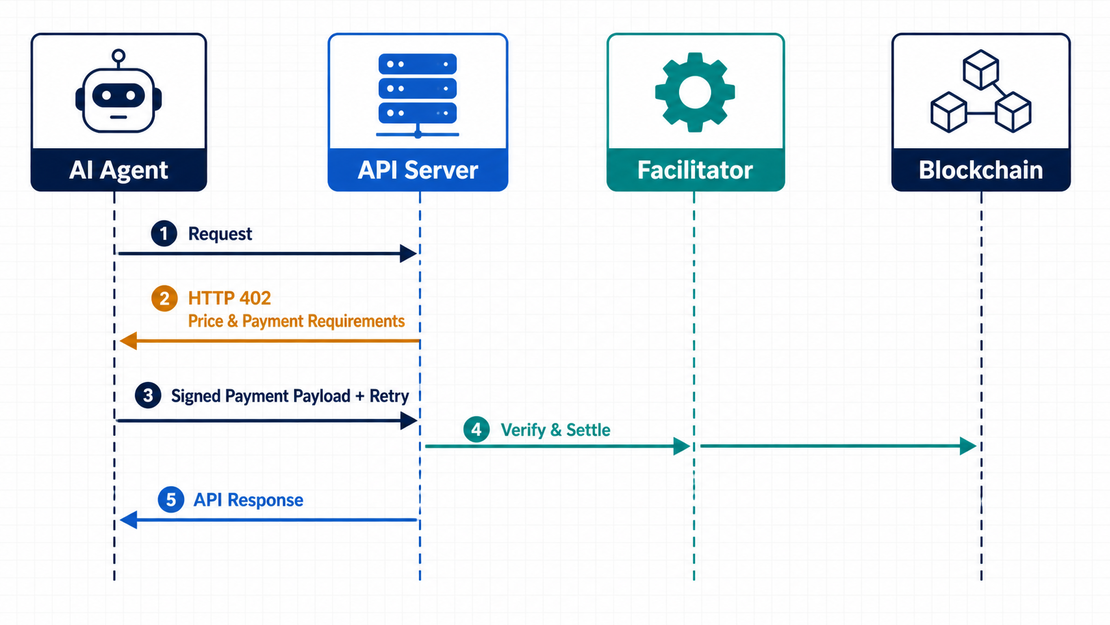
AI x Blockchain in 2026: Bittensor, DePIN, and Agent Finance
- whackur
- Blockchain
- June 30, 2026
“AI plus blockchain” spent most of the early 2020s as a marketing phrase. By mid-2026, it has organized into four distinct layers, each with its own competitive dynamics. Which projects have staying power, and what are the actual evaluation criteria at this point?
Read More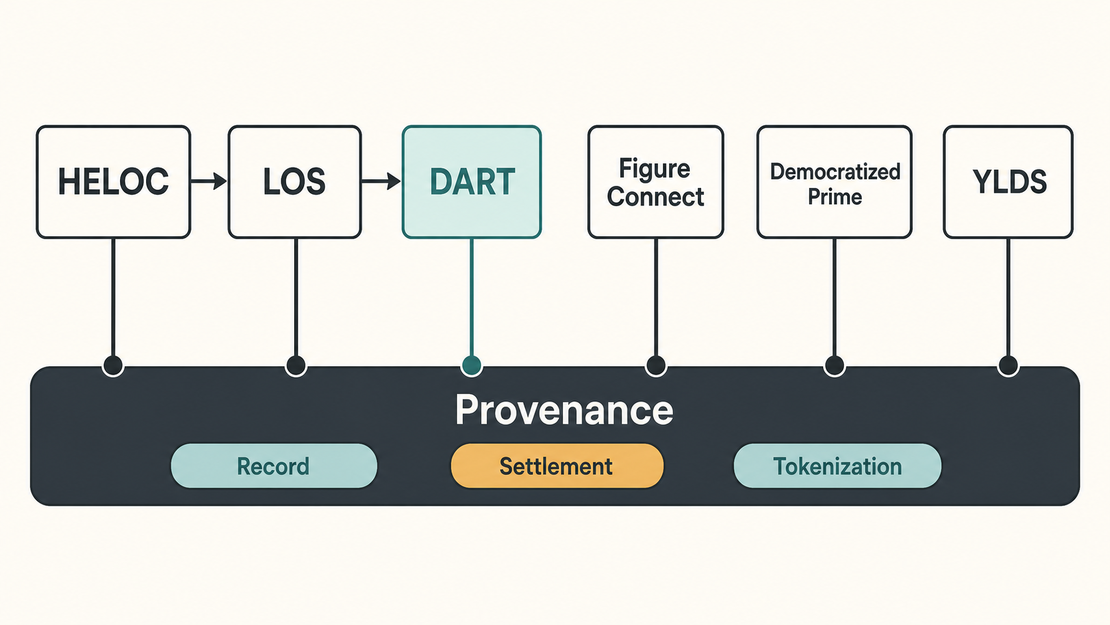
Figure: From HELOC Lender to Blockchain-Native Capital Markets
- whackur
- Blockchain
- June 30, 2026
Two companies go by the name Figure. One is Figure AI, the humanoid robotics company. The other is Figure Technology Solutions, which is what this post is about. They are unrelated.
Read More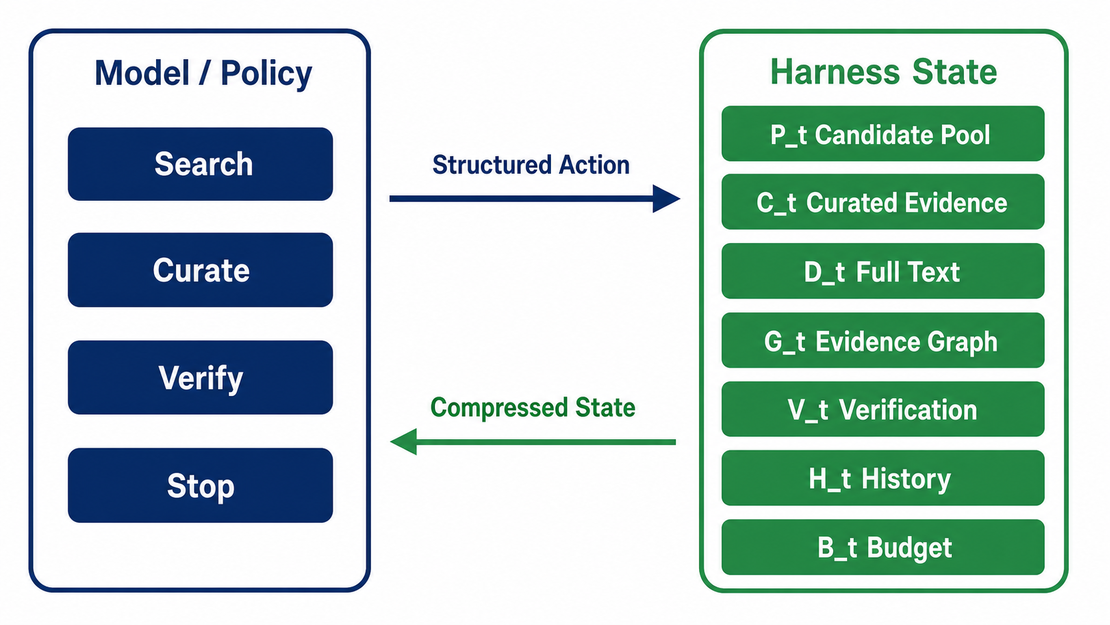
Harness-1: Teaching Search Agents to Offload State
Search agents and the state problem A search agent is an AI system that answers a question by iterating through multiple searches. Unlike a one-shot retrieval lookup, it reads intermediate results, adjusts its search strategy, compares candidate documents, and checks whether specific claims are actually supported by what it found. Tasks like analyzing financial filings, tracing multi-hop facts across sources, or interpreting complex regulations need this kind of iterative work. A single query won’t get you there.
Read More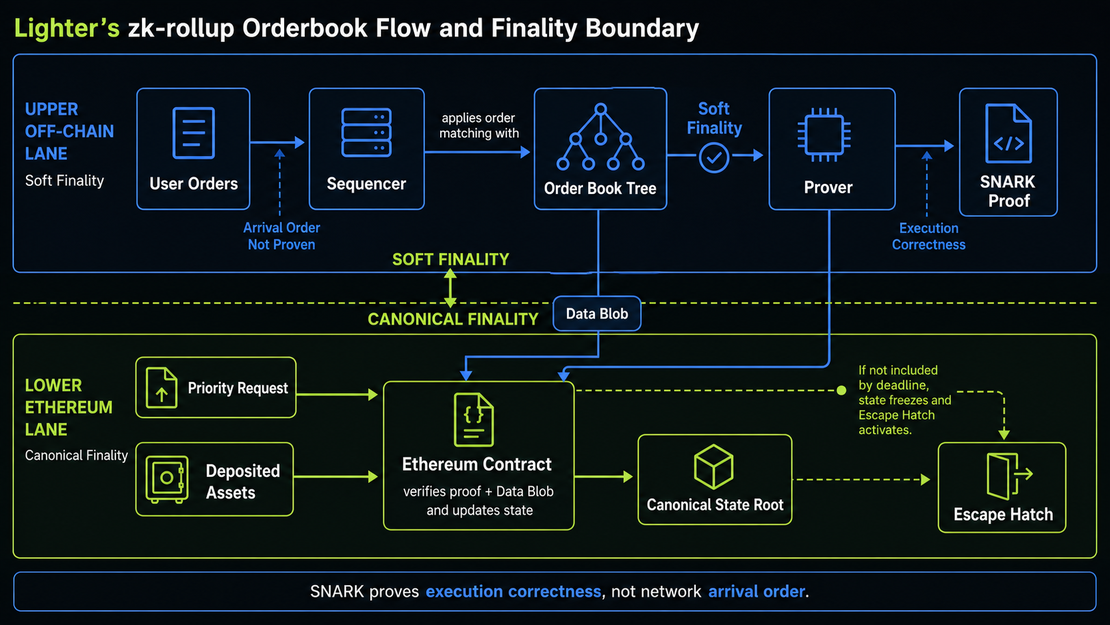
Lighter: A ZK-SNARK Orderbook DEX on Ethereum
- whackur
- Blockchain
- June 30, 2026
Decentralized exchanges come in two main forms. AMMs (Automated Market Makers) like Uniswap set prices algorithmically from pool ratios and work as permissionless swap venues. Orderbook DEXes match individual buy and sell orders by price and time priority, the same way centralized exchanges like Binance or Coinbase operate. Orderbooks enable limit orders, tighter spreads with active market-making, and more precise price discovery. AMMs do not.
Read More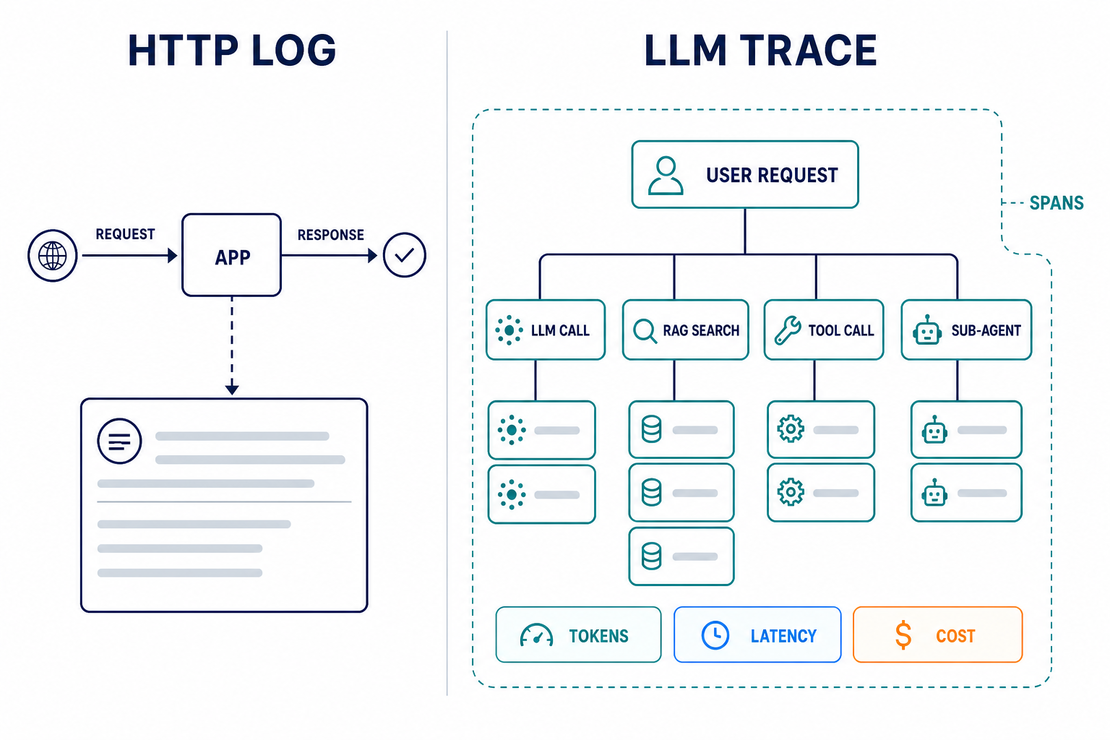
LLM Observability Without LangSmith: Five Open-Source Tools Compared
At some point in building LLM applications or agents, you need to know why a call failed, what the tool invocation looked like, or why the agent got stuck in a loop. LangSmith, LangChain’s commercial observability platform, has been the default answer for this: it covers trace visualization, prompt versioning, and evaluation in one place. Its usage-based pricing and cloud-hosted architecture are where teams start looking for alternatives. Traces carry raw user inputs and internal prompts, so shipping that data to an external SaaS is itself a problem for plenty of organizations.
Read More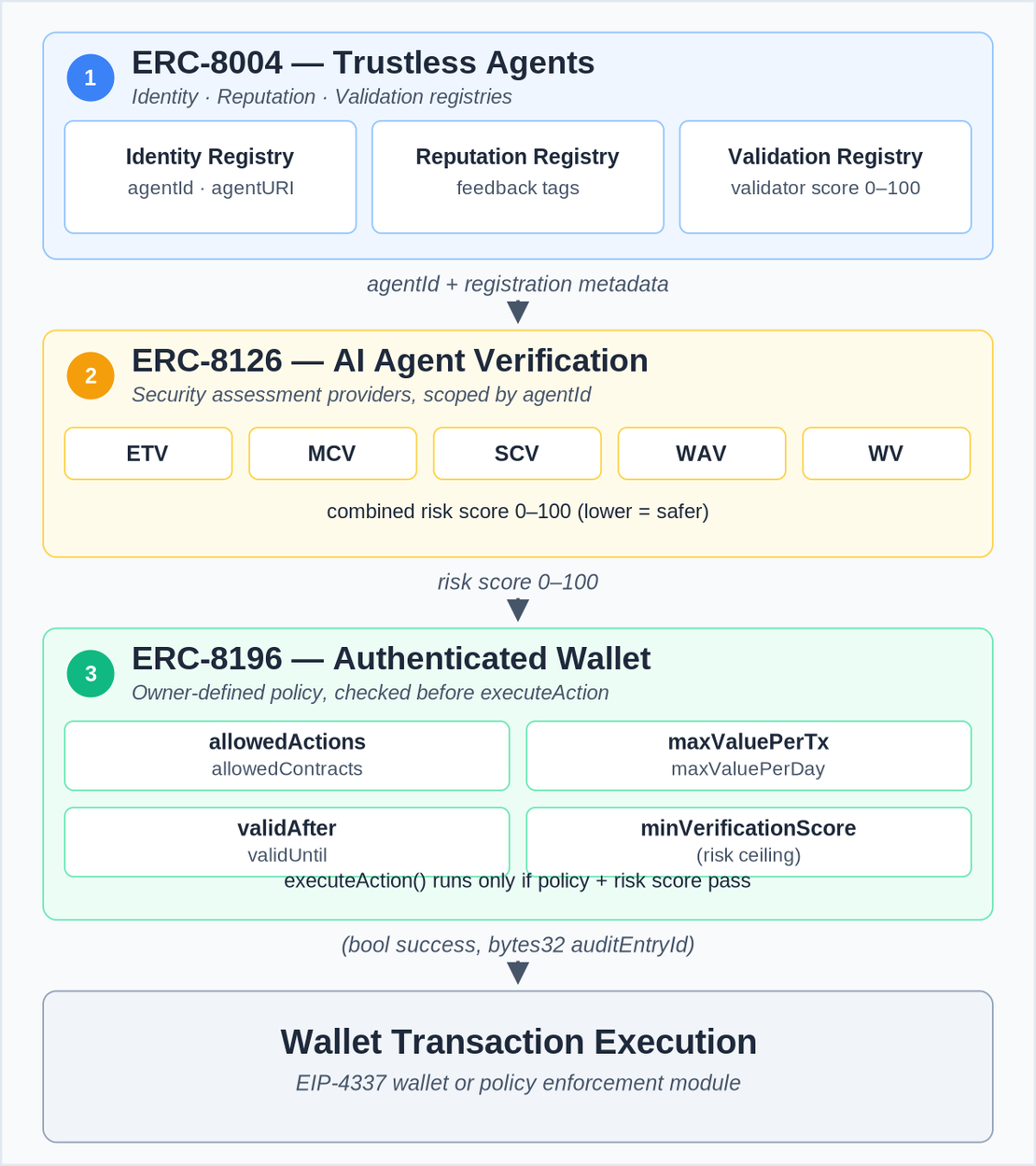
The AI Agent Trust Stack: ERC-8004, ERC-8126, and ERC-8196
- whackur
- Blockchain
- June 30, 2026
When an AI agent acts on behalf of a user (spending funds, calling contracts, accessing paid APIs), the obvious question is: how do you know this agent is safe? The Ethereum community has three standards that address different layers of that question. They don’t solve the whole problem, but they’re building toward a coherent stack.
Read More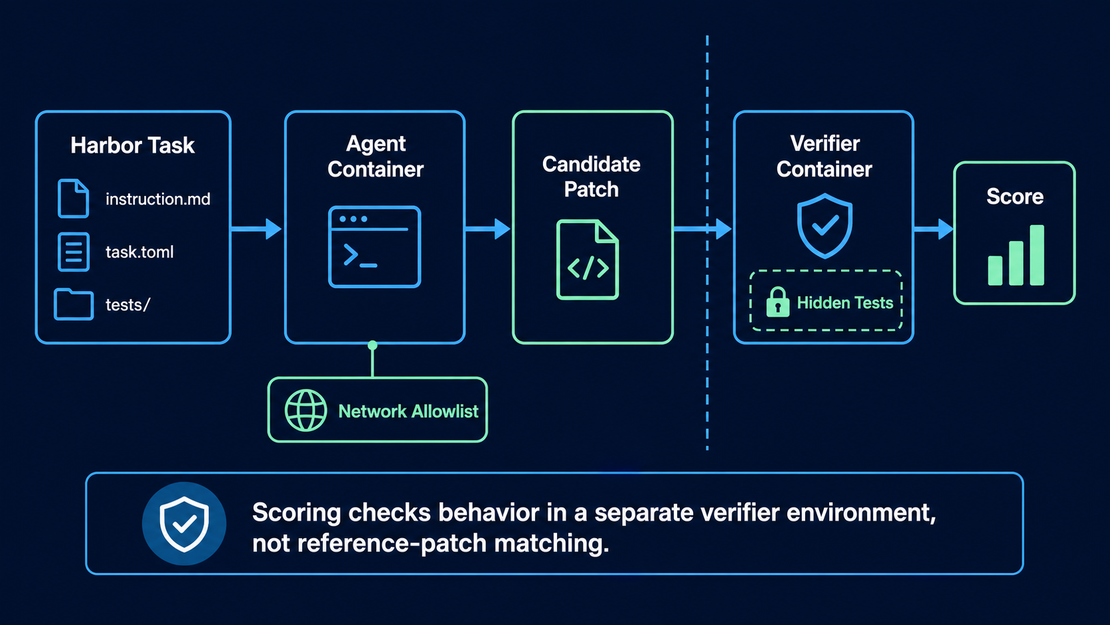
DeepSWE: A Benchmark for Long-Horizon Coding Agents
SWE-bench has been the default coding-agent leaderboard for a while, but it has well-known weaknesses. Most tasks come from existing public issues and PR patches, so a high score might partly reflect memorization. Most tasks are also single-file bug fixes, which is not representative of the multi-file, long-horizon work that a coding agent does in practice.
Read More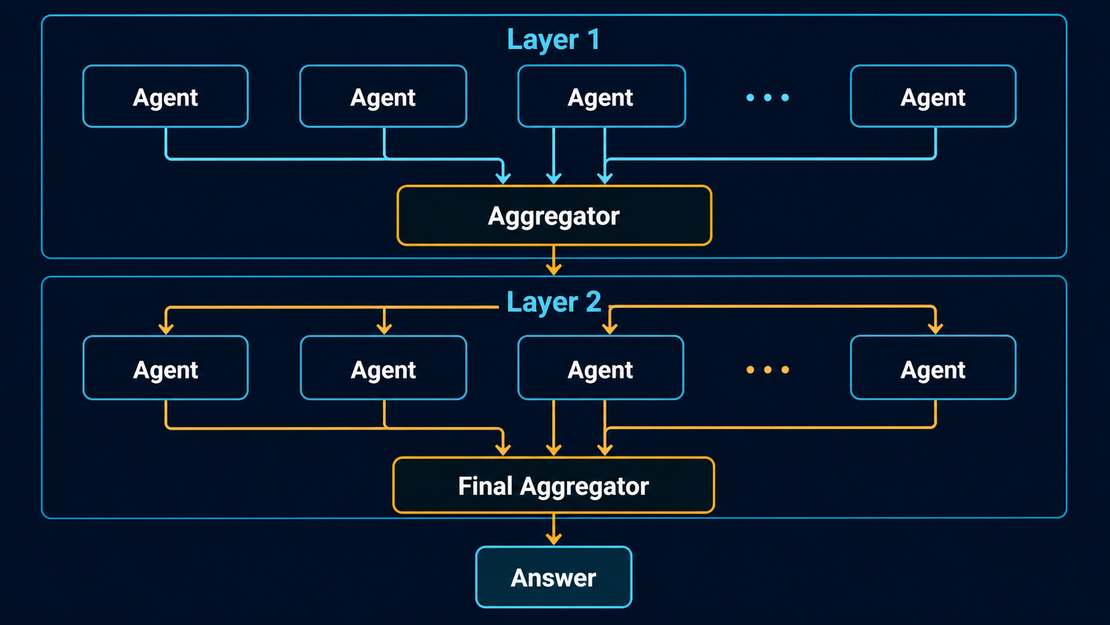
Mixture of Agents: How Layering Open-Source LLMs Beat GPT-4 Omni
Instead of scaling a single model up, you can stack multiple models in layers and have each one refine the previous layer’s output. Together AI’s research team formalized that approach in June 2024 as Mixture of Agents (MoA) in arXiv:2406.04692. Using only open-source models, their MoA configuration scored 65.1% on AlpacaEval 2.0, versus 57.5% for GPT-4 Omni.
Read More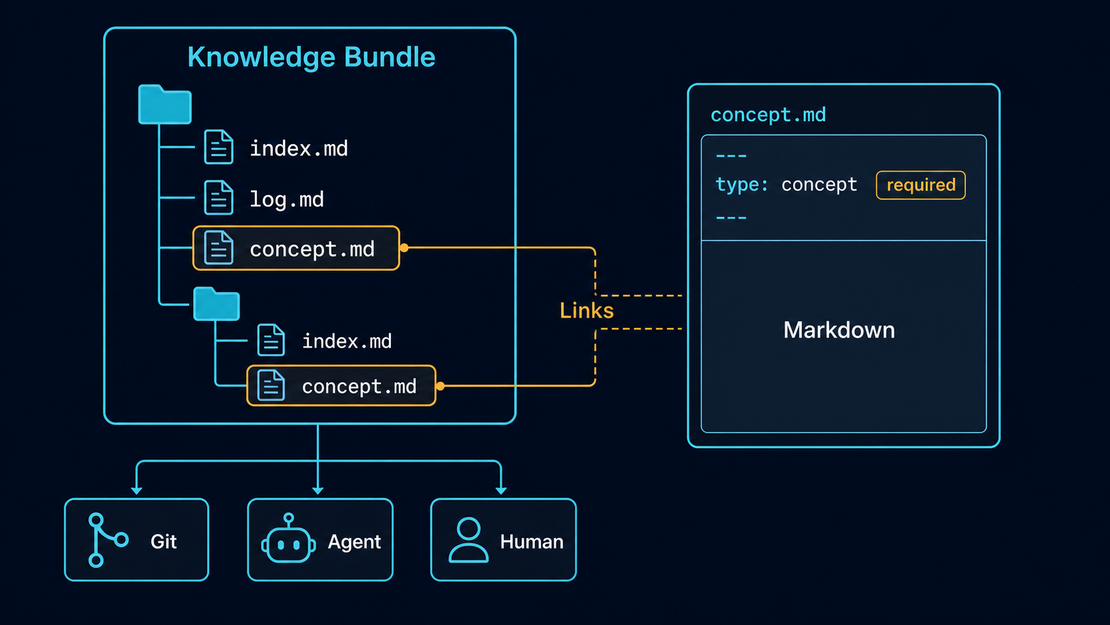
Open Knowledge Format: A Shared Vocabulary for Agent Knowledge
When AI agents fail in production, the model is often not the problem. The missing context is. Table schemas, metric definitions, runbooks, join paths between systems, and API deprecation notices are scattered across catalog vendors, internal wikis, code comments, and personal notes. Every agent developer solves the same context assembly problem from scratch.
Read More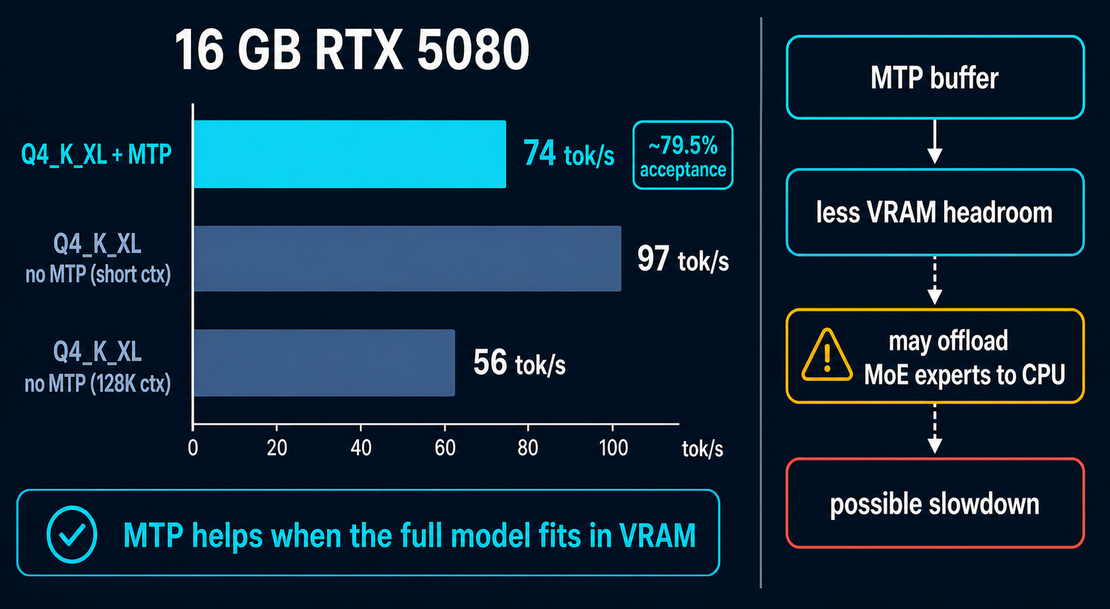
Qwen3.6-35B-A3B: Community Reviews, Uncensored Variants, and MTP Benchmarks
Alibaba released Qwen3.6-35B-A3B in April 2026: a 35B-parameter MoE model with around 3B active per token, a 262K native context, and an official SWE-bench score of 73.4%. Two months in, it’s the most widely tested 35B-class model in the local LLM community.
Read More
Robot Learning: A Tutorial (From Classical Robotics to Generalist Policies)
A practical way to start robot learning is to teleoperate one task, train an imitation policy such as ACT, and evaluate it on the same hardware under controlled conditions. Classical control handles joints and motion; the learned policy selects actions from observations. A VLA adds language instructions and pretraining, but calibration, data collection, and physical evaluation remain necessary. LeRobot’s official documentation also recommends ACT as a first policy.
Read More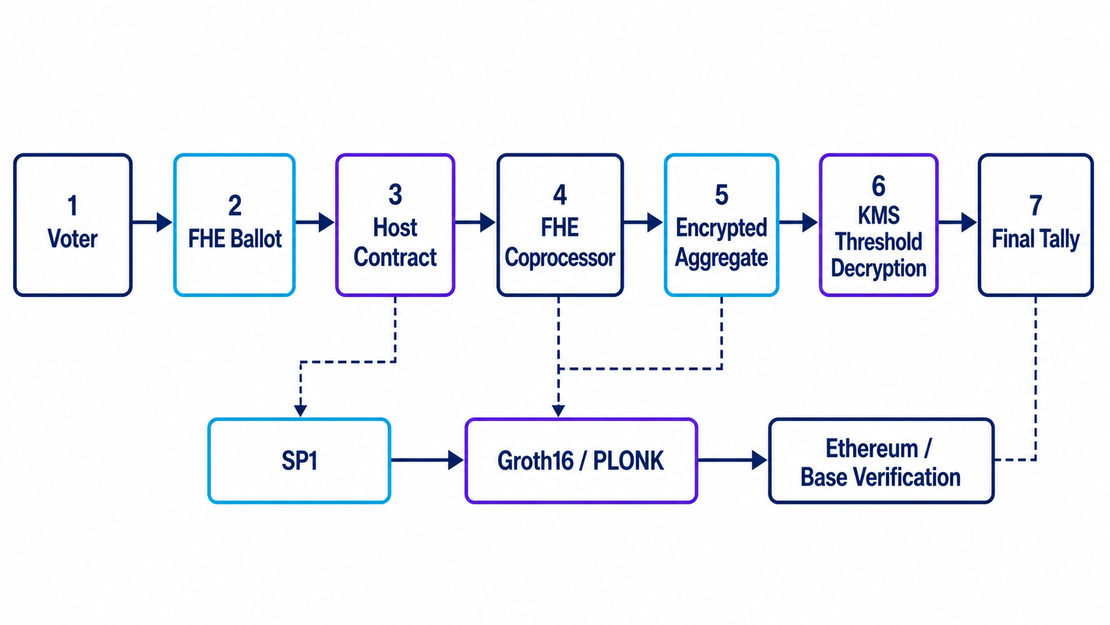
Secret Voting Architecture with FHE, SP1, and Groth16
- whackur
- Blockchain
- June 30, 2026
On-chain secret voting creates three tensions at once. Votes must stay hidden while still being tallied. Off-chain computation cannot be trusted without proof, yet results need to land on-chain. And the EVM cannot run heavy cryptographic operations natively, but it still needs to verify them. FHE (Fully Homomorphic Encryption), SP1 zkVM, and Groth16 each take on one of these.
Read More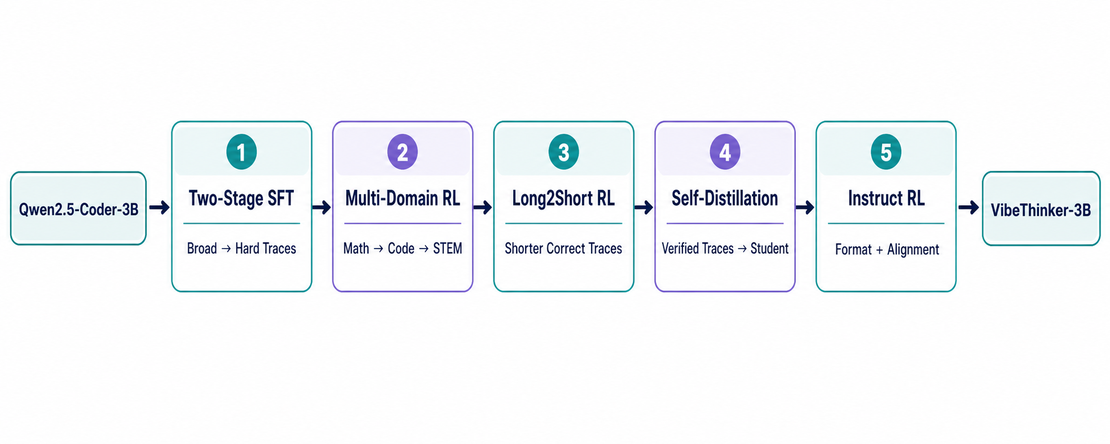
VibeThinker-3B: Packing Verifiable Reasoning into 3 Billion Parameters
“Small model beats big model” papers appear regularly. Usually the claim holds on a specific benchmark under specific conditions, not across the board. WeiboAI’s VibeThinker-3B, published June 15, 2026, follows a similar structure but draws a clearer boundary: the claim is not that a 3B model replaces a frontier generalist. The claim is that verifiable reasoning can be compressed into a small model, while open-domain knowledge and general dialogue still benefit from more parameters.
Read More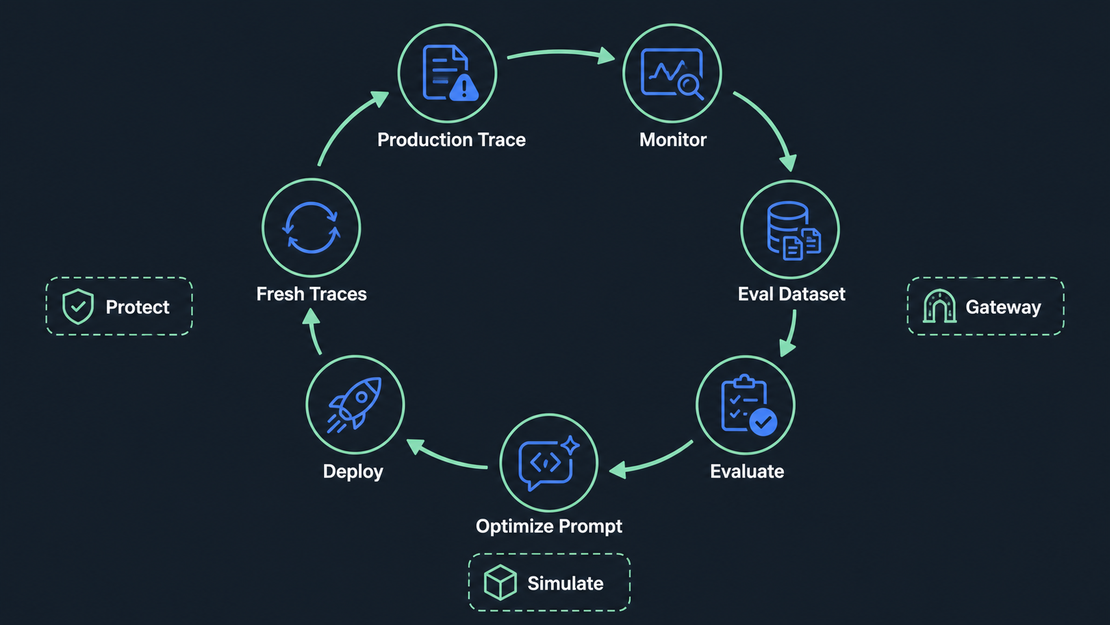
Future AGI: Evaluate, Observe, and Improve AI Agents in One Place
If you have shipped an AI agent, this will sound familiar. The demo runs fine. Then it hits production, the hallucinations start, and you can’t tell what went wrong or why. So you bolt on one tool for evals, another for tracing, another for guardrails. The real problem is that none of them talk to each other, so the loop you need to actually fix things never closes.
Read More